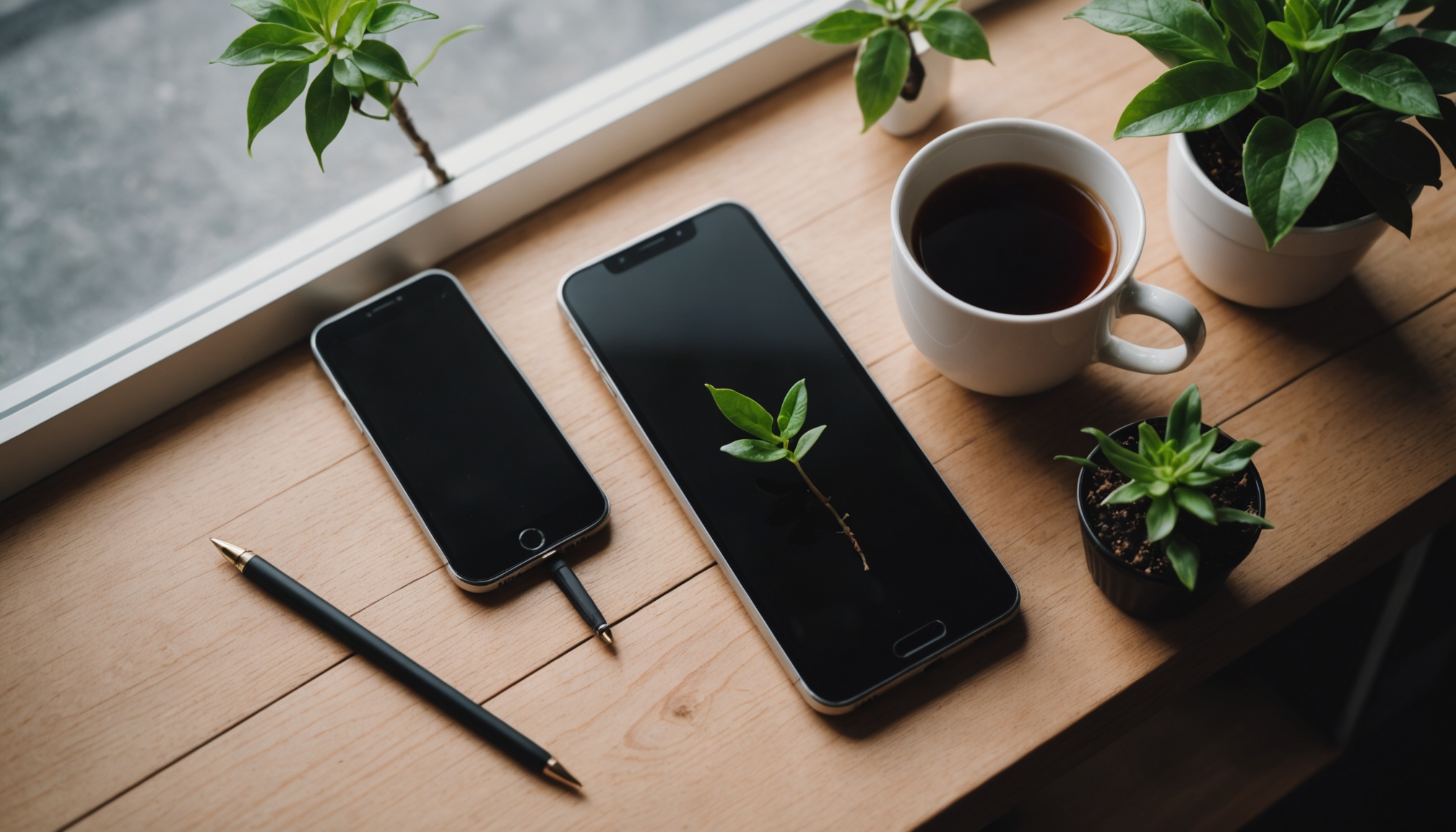
Between nonstop notifications and days ruled by screens, a deep-seated movement is taking hold in France: digital detox. Far from being a passing fad, this desire to take back control over screen time now rests on figures that raise eyebrows, and on concrete initiatives that are multiplying as winter approaches.
Screen Time Reaching Its Limits
According to the 2025 edition of the digital barometer (baromètre du numérique), conducted by Crédoc (the French research center for the study and observation of living conditions) for Arcep (the French telecom regulator) and its partners, people in France spend on average a quarter of their waking hours in front of a screen for personal use, or nearly four hours a day. Even more striking: 72% of French people exceed two hours of personal screen time daily, and a quarter cross the five-hour mark — a proportion that climbs to 39% among 18- to 24-year-olds.
This massive exposure ultimately weighs on how French people view their own habits: 42% consider their screen time excessive, and that share rises to 62% among younger people. This concern echoes worries already documented about teenage mental health, where digital overstimulation is regularly singled out.
Why Disconnecting Is Becoming an Organized Effort
What's changing compared to previous years is how this fatigue is now translating into action. In its analysis, the forward-looking review Futuribles notes that voluntary disconnection is no longer a marginal stance but is becoming established as a structural response to years of digital saturation. Public initiatives like “OFF February,” promoted by Fnac's lifestyle division (Fnac being a major French electronics and media retailer), draw more participants each year to test a guided period of digital sobriety, proof that demand now extends well beyond a circle of insiders.
The phenomenon also extends to the workplace: the lasting rise of remote work has blurred the line between professional life and personal screen use, making disconnection harder to organize but all the more sought after by employees who feel they need it.
Concrete Ways to Lighten Your Screen Time
- Turn off nonessential notifications outside of work hours
- Set screen-free time blocks, especially before bed — a habit that directly benefits the quality of sleep
- Replace the reflex of reaching for your smartphone upon waking with a screen-free activity
- Measure your actual usage time with built-in tracking tools before setting a gradual reduction goal
- Favor time dedicated to reading or physical activity rather than passive scrolling
A Lasting Trend, Not a Passing Gadget
One misconception still needs correcting: thinking that digital detox only concerns a minority seeking wellness. The figures from the digital barometer show, on the contrary, a broad shift in perception that touches every generation, even though younger people are the most affected. Between multiplying public health initiatives and corporate policies dedicated to digital support, disconnection is becoming a lasting fixture in the French wellness landscape.
Frequently Asked Questions
Does digital detox mean giving up screens entirely?
No. It's mainly about reducing nonessential use and regaining control over notifications, not giving up digital tools that are useful in daily life or at work.
How long does it take to feel an effect on well-being?
According to the digital barometer, simply becoming aware of time spent on screens is already enough to change how people perceive it; a gradual, measured reduction, rather than going cold turkey, is generally recommended to make it sustainable.
Are companies supporting this movement?
Yes, several employers are putting in place right-to-disconnect charters and periods free of digital demands, particularly in organizations where remote work has become firmly established.
Sources
- Arcep — Digital Barometer, 2025 edition
- Futuribles — Digital detox: time to disconnect?
- L'Éclaireur Fnac — OFF February: Is a digital detox really possible?
This article was written with the help of artificial intelligence. Editorial policy