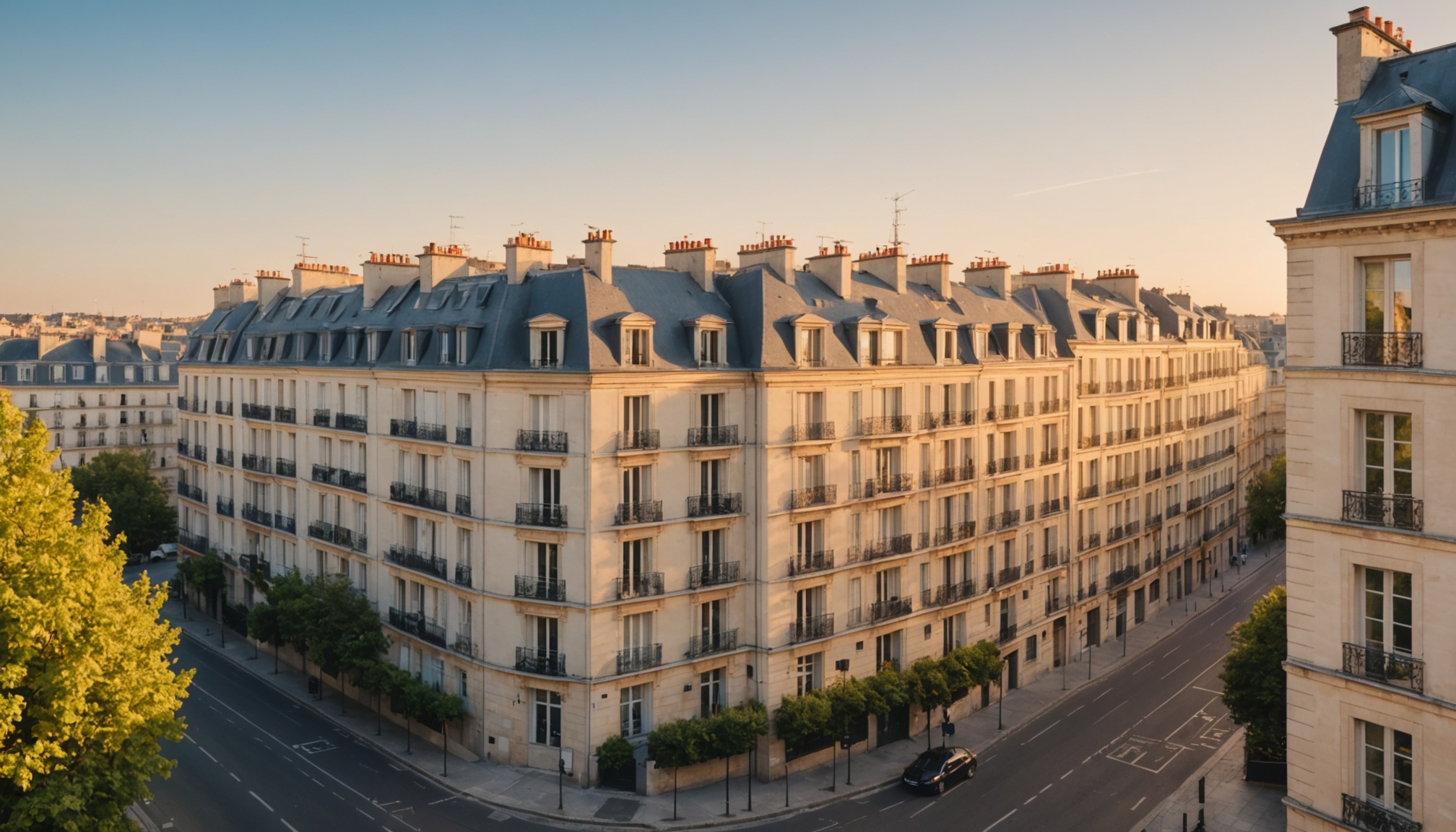
The real estate market in France is confirming its recovery in the summer of 2026, but this improvement is not uniform. The latest sector figures show transaction volumes back to normal, prices stabilizing in major cities, and an increasingly clear gap between apartments and single-family homes. Here's an overview of a two-speed market, at a moment when the fall season is set to be decisive for mortgage rates.
A Recovery Confirmed by the Numbers
Over the twelve months preceding the end of May 2026, around 949,000 existing-home sales were recorded in France, a level that marks a return to normal market activity after several years of slowdown. This rebound in volume comes alongside a stabilization of prices: in Paris, the average price per square meter now stands at around 9,811 euros, far from the sharp correction seen between 2022 and 2024.
Apartments and Houses: Two Opposite Trajectories
The most notable trend this fall remains the divide between property types. As detailed in our article on the existing-home market and the resilience of apartments, well-located multi-unit properties are holding up noticeably better than single-family homes, which continue to see their prices correct downward. In the Île-de-France region, prices have even started to tick back up slightly year-over-year (+0.4%), driven exclusively by apartments.
- Mid-sized cities with strong university and economic activity remain the most dynamic markets, both in volume and in price.
- The luxury segment is holding firm against the broader slowdown: certain coastal towns, such as Saint-Jean-Cap-Ferrat, rank among the most expensive destinations in Europe for high-end real estate.
- Single-family homes, meanwhile, continue their downward adjustment, including in cities that were once highly sought after.
Mortgage Credit, the Key Variable This Fall
The mortgage rate is holding steady at around 3.3% over twenty years as the summer winds down, with the best borrower profiles obtaining 3.07% over fifteen years, 3.19% over twenty years, and 3.29% over twenty-five years. As our analysis of the distinctive features of French mortgage lending points out, several signals could nonetheless put pressure on these levels this fall: the French ten-year government bond (OAT) crossing the 4% threshold, the revaluation of the Livret A (France's popular tax-free savings account), and inflation that remains closely monitored, as shown by the latest figures on the French economy. The European Central Bank meets on September 10, a date that mortgage brokers are watching closely.
What This Means for Buyers and Sellers
For buyers, the current window remains favorable: rates are still contained and prices have stabilized in most major metropolitan areas. Brokers nonetheless advise preparing your loan application now — pay stubs, tax notices, proof of savings — to lock in a rate before any potential tightening by banks in the fall. For sellers of single-family homes, however, caution is still warranted: the price correction in this segment is not yet over, and selling times may lengthen in less competitive areas.
Frequently Asked Questions
Has the French real estate market really bounced back in 2026?
Yes, transaction volume has risen significantly, with nearly 949,000 sales recorded over the twelve months ending May 2026, a level consistent with normal market activity.
Why are apartments holding up better than houses?
Well-located apartments, particularly in city centers and near public transit, continue to see strong demand, while single-family homes are suffering more from rising energy and maintenance costs, as well as from locations that are sometimes less desirable.
Will mortgage rates rise this fall?
The most likely scenario is one of stability under pressure, with targeted increases depending on the bank. Several factors, such as the rise in the ten-year OAT, could nonetheless push rates slightly higher.
Sources
- SeLoger — Real Estate Prices in France
- Pretto — Mortgage Rate Analysis, August 2026
- Rentila — Real Estate News Update, August 2026
This article was written with the help of artificial intelligence. Editorial policy