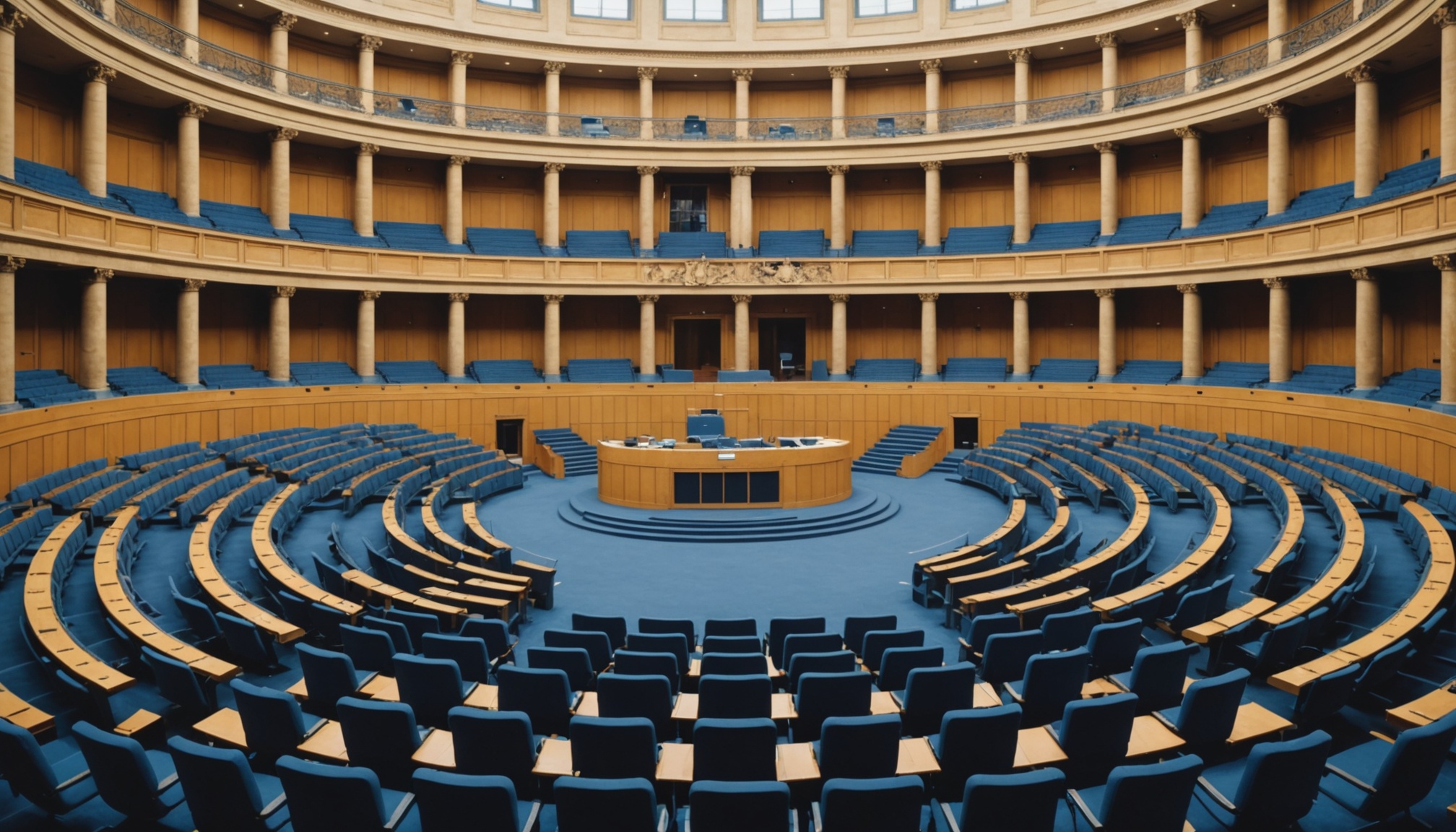
The National Assembly votes this Tuesday in a solemn vote on the housing bill, a text aimed at reviving construction after several years of slowdown in the sector. Beyond the outcome of the vote, it is above all the content of the text that directly concerns tenants, homeowners, and mayors.
The government presents this bill as a response to the housing crisis in France: reviving private rental investment, facilitating the construction of social housing, and giving local governments more room to maneuver. The debates, held over several weeks, nevertheless shifted the text on sensitive points.
Social Housing: Mayors Given Greater Powers
The most concrete measure for municipalities concerns the allocation of social housing. Mayors will now be able to oppose certain allocations, particularly in cases of public order disturbances or risks to a neighborhood's social diversity. They will also be able to directly propose tenant candidates to the allocation committees, which nevertheless remain the sole decision-makers in the end.
This change responds to a recurring demand from associations of local elected officials, who had been calling for more influence in a process currently largely controlled by social housing providers and prefectures (local state administrations).
Energy-Inefficient Rentals: An Amendment That Changes Everything
On the energy renovation front, the text took an unexpected turn: an amendment easing the rules for putting highly energy-inefficient rental units—the so-called “passoires thermiques” (“thermal sieves”)—back on the market was adopted during the session, contrary to the position initially defended by the government. The Minister of Housing said he intends to reverse this provision during the next parliamentary steps, suggesting further debates are likely before the text's final adoption.
For landlords, this episode illustrates a simple reality: the rules on energy-inefficient rentals, already changed several times in recent years, are not yet set in stone and could still evolve before the text takes final effect.
What This Text Says About the Current Budget Approach
- The housing bill's timeline adds to an already packed parliamentary agenda, at a time when the French state budget is struggling to be adopted within the usual timeframe.
- The texts examined in 2026 confirm a trend: one-day majorities, built around a single amendment, can reshape entire laws without the government's position systematically prevailing.
- For households, the concrete impact will only be measurable once the text is definitively adopted, after a possible review by the Senate and a new reading in the National Assembly.
This dynamic, in which a single amendment can reverse the spirit of an article, is similar to what is currently playing out regarding the state budget timeline, where every stage can still shift the balance. Tenants affected by the recently extended rent control will closely follow the next steps of this text, which touches on the same rental market regulation issues.
Frequently Asked Questions
Has the housing bill been definitively adopted?
No. The solemn vote in the National Assembly is only one step: the text must then be reviewed by the Senate before final adoption.
What does the text change for mayors?
Mayors will be able to oppose certain social housing allocations and directly propose tenant candidates, though without having the final say, which remains with the allocation committee.
Do the rules on energy-inefficient rentals change immediately?
No. The amendment adopted at first reading in the National Assembly can still be modified during subsequent steps, particularly if the government succeeds in having it removed in the Senate or at a new reading.
Sources
- Public Sénat — budget timeline and parliamentary deadlines
- MySweetImmo — content of the housing bill
- Boursorama — debates on energy-inefficient rentals
This article was written with the help of artificial intelligence. Editorial policy