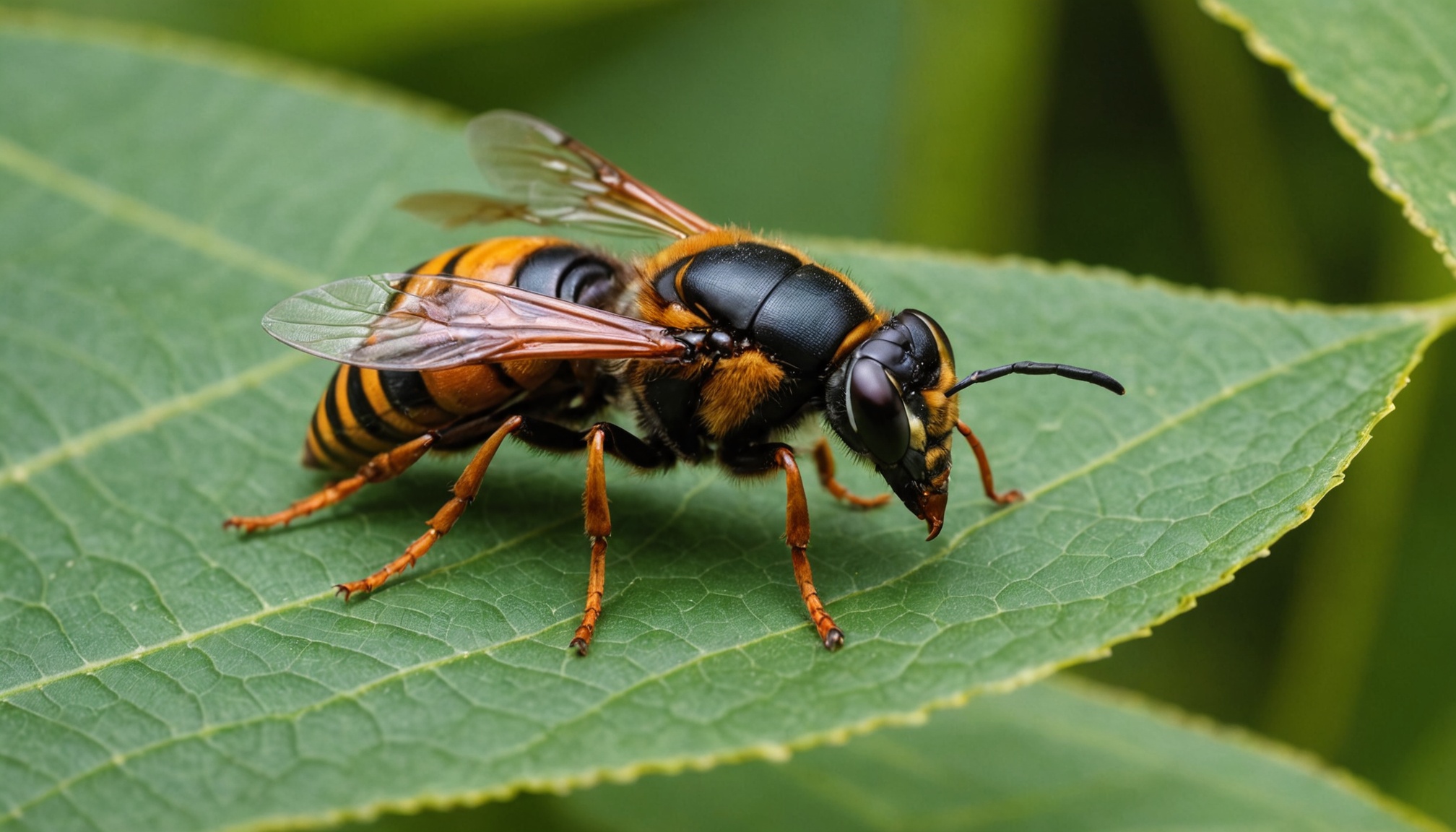
France's national plan to combat the Asian hornet officially took effect on September 16, 2026, after the implementing decree was published in the Journal officiel (France's official gazette), jointly signed by Agriculture Minister Annie Genevard and Ecological Transition Minister Mathieu Lefèvre. The text stems from a law passed unanimously in March 2025 and marks the first structured national coordination against a species that has been present in every mainland French department since its accidental introduction in 2004.
Backed by an exceptional budget of 3 million euros for 2026, the plan no longer aims for the total eradication of the yellow-legged Asian hornet, deemed impossible, but instead pursues a targeted containment strategy designed to reduce the nuisance and the impact on bee colonies and local biodiversity.
What Actually Changes for Residents and Towns
The real novelty of the text lies less in the budget than in the reorganization of nest reporting. Each town now serves as the designated point of contact, and mayors receive legal tools to organize the detection and destruction of nests through a single national platform linked to the Inventaire national du patrimoine naturel (INPN, France's national inventory of natural heritage). Residents can also report a nest to their town hall or directly online at frelonasiatique.mnhn.fr.
Each department has six months, until roughly March 2027, to draw up its own local roadmap based on the national framework. It is this shift toward the local level that will determine, in the coming months, the plan's real effectiveness on the ground — far more than the size of the budget itself.
This effort comes against a backdrop of ongoing biodiversity decline in France, which is prompting public authorities to expand monitoring and protection measures for threatened species.
Identifying a Nest and Responding Without Taking Risks
- The Asian hornet is recognizable by its black thorax, its dark abdomen marked with a thin orange band, and above all by its legs with yellow tips.
- Nests can be found high up in trees as well as close to homes: roofs, garden sheds, hedges.
- If you spot a nest: keep your distance, never try to destroy it yourself, and report its location to your town hall or the official platform.
- If stung: intense localized pain is the most common reaction, but multiple stings or an allergic reaction require calling 15 or 112 (France's emergency medical and emergency numbers) without delay.
This individual vigilance complements a broader effort to protect against invasive species at the European level, an issue on which France is also pushing for a coordinated response with its neighbors.
A Mobilization That Goes Beyond Government Agencies
Beyond the regulatory text, the plan's success will depend heavily on citizen participation. Several towns already rely on participatory surveys of local biodiversity, a dynamic that could help with early nest detection before nests reach their maximum size in the fall, when colonies are most active.
Frequently Asked Questions
Will the National Plan Eliminate the Asian Hornet?
No. The government has explicitly abandoned the eradication goal, deemed unrealistic given how well established the species is across mainland France. The stated objective is to contain its spread and reduce its impact on beehives and biodiversity.
How Do You Report an Asian Hornet Nest?
There are two main channels: contacting your town hall directly, now designated as the point of contact, or submitting a report online via the frelonasiatique.mnhn.fr platform, which is linked to the Inventaire national du patrimoine naturel.
What Should You Do If Stung by an Asian Hornet?
A single sting most often causes sharp pain and local redness without being serious. However, multiple stings or any sign of an allergic reaction (facial swelling, difficulty breathing) require an immediate call to 15 or 112.
Sources
- Ministry of Ecological Transition — launch of the national plan
- Réussir — measures of the national control plan
- ARS Centre-Val de Loire (regional health agency) — what to do about a nest or a sting
This article was written with the help of artificial intelligence. Editorial policy