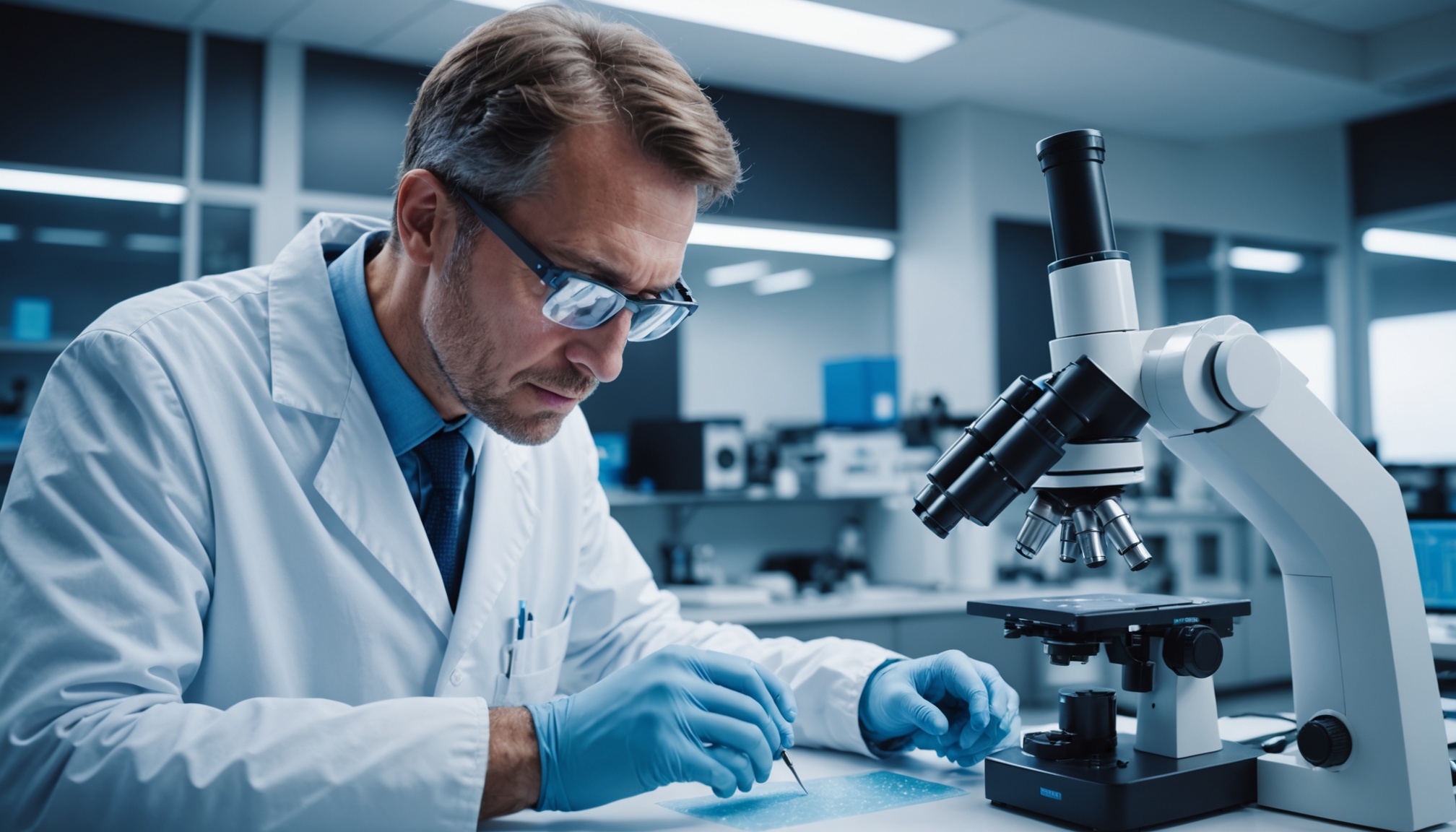
For decades, severe burn victims and patients needing a skin graft depended on skin taken from their own bodies, a process that is often painful and limited. A French consortium has just announced a world first: living artificial skin, grown in a lab and then frozen, ready to be transplanted on demand.
The GENESIS project, a public-private alliance
Led by the Urgo group, the project, named GENESIS, has brought together the CNRS, the University of Lyon 1, the Center for the Study of Stem Cells (CECS), the French Blood Establishment (Établissement français du sang), and Dassault Systèmes since 2021. The whole effort is financially backed by the France 2030 investment plan. The announcement was made on November 20, confirming a breakthrough that researchers describe as “100% French.”
Unlike existing autologous graft techniques, which require taking healthy skin from the patient themselves, this tissue is produced in advance in a lab. The cells that make it up remain alive and functional after thawing, which would make it possible to have a stock on hand for emergencies, particularly for severe burn patients.
Why this breakthrough changes the game
For medical teams, the benefit is twofold. First, it saves precious time: there is no longer any need to wait for a healthy patch of skin to be harvested and grown from the patient, a process that can take several weeks. Second, it reduces the pain and additional scarring associated with harvesting, especially for patients who are already severely weakened.
- A living tissue, produced in advance and stored frozen until use.
- No additional skin harvesting from the patient at the time of the graft.
- A consortium bringing together public research (the CNRS, Lyon 1), healthcare (the French Blood Establishment), and industry (Urgo, Dassault Systèmes).
- Public funding through France 2030, a sign of what is seen as a strategic stake for the French healthcare sector.
Still several years before routine transplants
While the announcement marks a major scientific milestone, the road to everyday use remains long. The first clinical trials in humans are expected around 2030, with the goal of scaling up industrial production and commercialization by 2040. Researchers will in particular need to demonstrate the tissue's safety and effectiveness over time, and have the method validated by health authorities before any widespread rollout.
This breakthrough is part of a broader movement in French research in tissue engineering, a field in which several French teams are already recognized internationally. It also comes as the country seeks to strengthen its health care sovereignty over technologies considered critical, continuing a line of other projects backed by the same investment plan, as economic analyses of France 2030 regularly point out.
Frequently Asked Questions
What is the GENESIS project?
It is a French consortium bringing together the Urgo group, the CNRS, the University of Lyon 1, the Center for the Study of Stem Cells, the French Blood Establishment, and Dassault Systèmes, backed by the France 2030 plan, which has developed living artificial skin ready to be transplanted.
How is this artificial skin different from current grafts?
It is produced in advance in a lab and kept frozen, whereas current techniques generally require taking healthy skin from the patient themselves at the time of the procedure.
When will this technique be available for patients?
The first clinical trials in humans are planned around 2030, with larger-scale commercialization expected by 2040, allowing time to validate the safety and effectiveness of the process.
Sources
L'Usine Nouvelle —
Petites Affiches —
Head Topics
This article was written with the help of artificial intelligence. Editorial policy