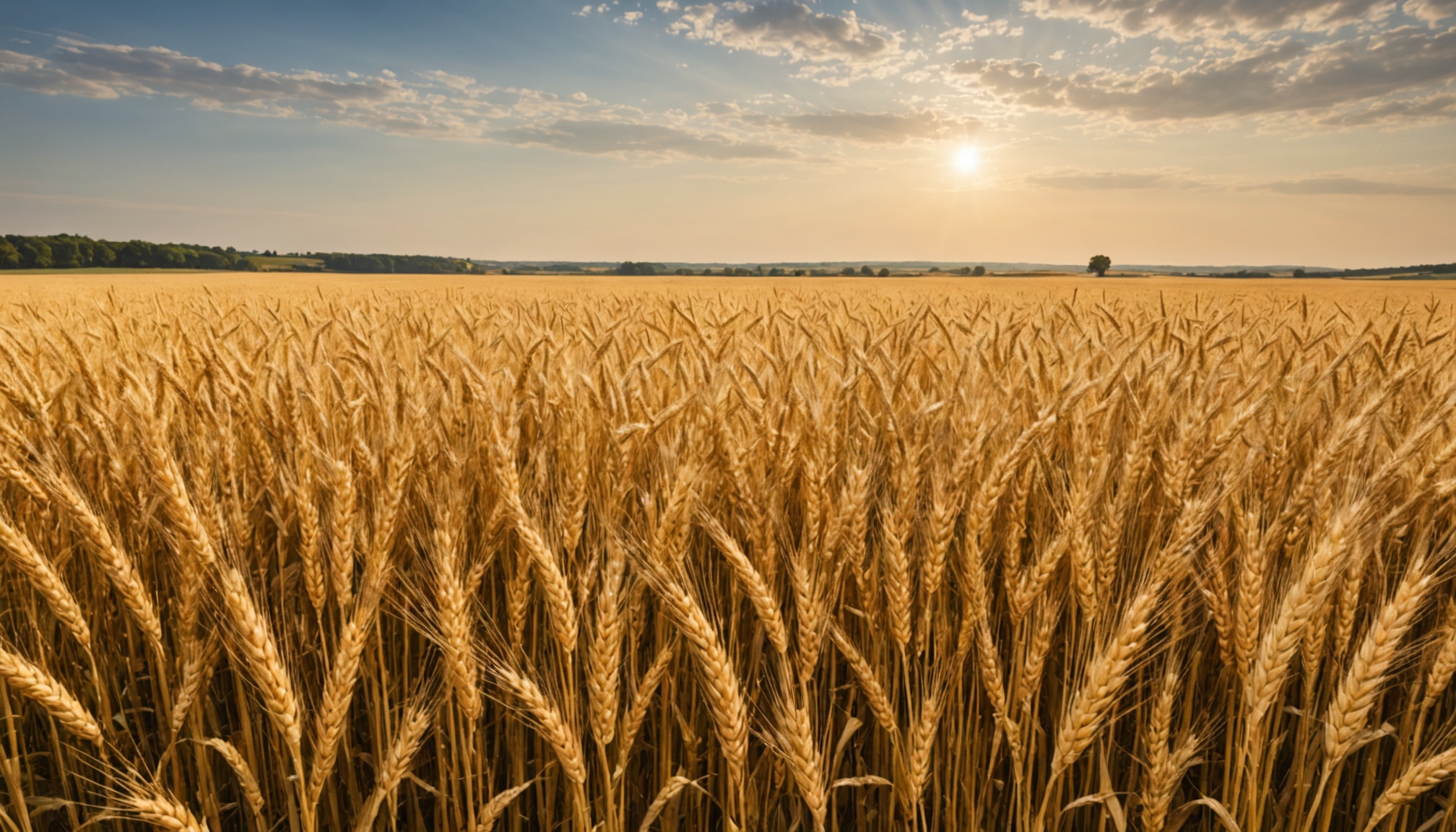
France's 2026 soft wheat harvest is shaping up to be smaller, hit hard by the heat waves that have battered crops since May. Should bakeries and grain silos worry about a shortage? The figures published by FranceAgriMer (the French agency for agricultural and seafood products) give a clear answer: no, thanks to exceptionally high stockpiles.
A smaller harvest, confirmed by several sources
According to estimates from the Ministry of Agriculture and FranceAgriMer, soft wheat production in France is expected to reach around 32 million metric tons in 2026, a drop of roughly 4% compared with 2025. Durum wheat, used mainly for pasta, is hit even harder: its production falls by nearly 15% year over year and by 18% compared with the five-year average, down to about 1.1 million metric tons. The cause is a string of heat waves that sped up harvesting and weighed on yields.
Why the risk of shortage is ruled out
Despite this disappointing harvest, industry professionals agree on one point: there is no risk of a shortage for French consumers. The reason lies in the stockpiles built up over previous growing seasons. The carryover stock—the amount of wheat left unconsumed and rolled over into the new season—is estimated at 3.6 million metric tons, a level not seen in more than twenty years. The ending stock expected at the close of the season, around 1.9 million metric tons, represents on its own more than two months of national consumption.
- 2026 soft wheat production: about 32 million metric tons (-4% year over year)
- Durum wheat production: about 1.1 million metric tons (-15% year over year)
- Carryover stock: 3.6 million metric tons, a record in more than 20 years
- Ending stock: 1.9 million metric tons, or more than two months of consumption
France remains a major exporter
Another sign that the situation is nothing to worry about: FranceAgriMer expects French exports to exceed 14 million metric tons of wheat for the 2026-2027 season, with about 7 million metric tons heading to countries outside the European Union. The international backdrop is working in French wheat's favor too, since a corn shortage on the animal feed market is indirectly boosting demand for French wheat. This tightness in agricultural commodities is part of a broader economic climate, marked by inflation that continues to strain household budgets, as already shown by the recent rise in the price of eggs.
What this means for consumers
For households, the issue isn't wheat availability but rather its price, which can fluctuate depending on global markets and production costs. The rise in energy costs, detailed in our article on inflation and household energy bills, weighs for instance on the cost of turning grain into flour and then into bread. This comes on top of a broader economic slowdown, visible in the recent decline in French GDP in the third quarter. Bakers and millers, for their part, are mainly keeping an eye on grain quality, sometimes affected by the heat, rather than on the quantity available.
Frequently Asked Questions
Will France run short of wheat in 2026?
No. Despite a smaller harvest, carryover stocks have reached their highest level in more than twenty years, ruling out any risk of a shortage for consumers.
Why did the wheat harvest decline in 2026?
The heat waves that occurred from May onward sped up the harvest and reduced yields, hitting durum wheat, used for pasta, particularly hard.
Is France still exporting wheat despite the drop in production?
Yes, FranceAgriMer forecasts more than 14 million metric tons of exports for the 2026-2027 season, with nearly half going to countries outside the European Union.
Sources
Terre-net.fr —
Europe1.fr —
Agri-Mutuel.com
This article was written with the help of artificial intelligence. Editorial policy