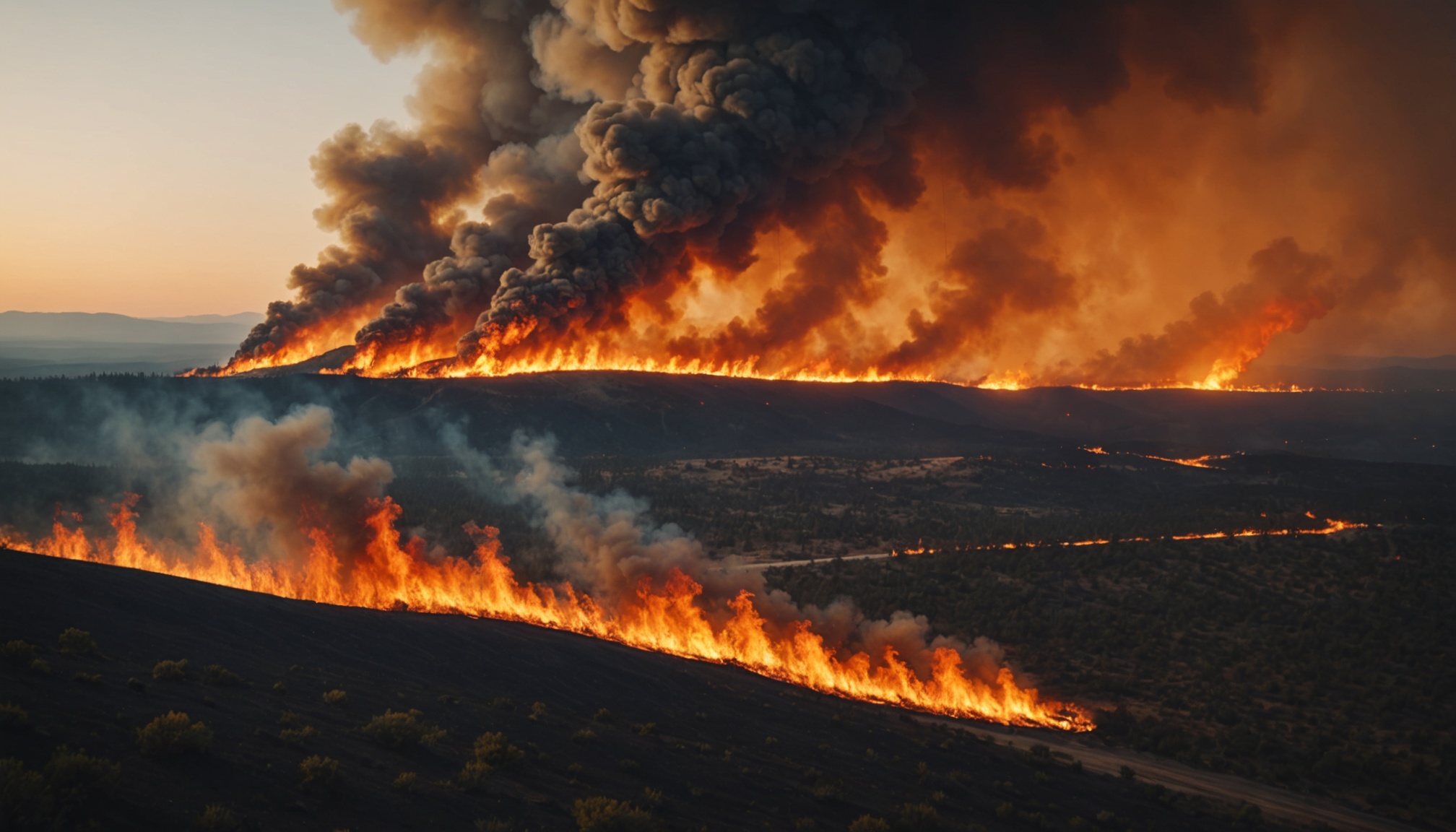
A new scientific study confirms what many sensed on the ground this summer: the wildfires that ravaged France were no accident. According to a joint analysis by the international World Weather Attribution (WWA) network and researchers from INRAE (the French national research institute for agriculture, food, and the environment), human-caused climate change has simply doubled the likelihood of the extreme weather conditions behind this summer's major fires in France.
A Risk Multiplied, in Both France and Spain
Researchers compared today's climate to that of a world without human-driven warming in order to assess human influence on the drought and extreme heat episodes that fueled the fires. The results are unequivocal:
- In France, climate change has doubled the likelihood of extreme conditions conducive to major fires.
- In Spain, where the fires were especially destructive, that likelihood was multiplied by 20.
- Warming over the past 26 years alone has pushed up the risk of severe wildfires by 40% in France, and nearly tripled it in Spain.
In concrete terms, the 2026 season has already seen more than 115,000 hectares of vegetation go up in smoke in France, a toll that illustrates the scale of the phenomenon. This surge echoes the heat wave that recently outlasted the one from 2003, an episode that had already made a strong impression because of its severity.
How Climate Turns a Brushfire into a Catastrophe
The mechanism highlighted by scientists is simple to understand but carries serious consequences. Climate change does not directly start a wildfire: it is almost always human activity, whether intentional or accidental, that sparks it. What it does, however, is create an environment far more conducive to its spread. Prolonged drought dries out vegetation, turning it into easily flammable fuel. Heat and wind then speed up the flames' progress, making fires faster, more intense, and harder for emergency crews to control.
This finding aligns with observations on broader warming across ecosystems, such as those detailed in the recent report on record heat recorded in the oceans, which is also fueling more extreme weather conditions on neighboring continents.
Consequences That Go Beyond the Fire Risk Alone
Beyond the immediate damage to forests, homes, and sometimes human lives, scientists point out that the increase in major wildfires is lastingly weakening ecosystems. The repeated destruction of forested areas heightens fragmentation of natural habitats, a phenomenon that isolates entire species populations and makes it harder for them to adapt to new climate conditions — a topic explored in detail in our article on the fragmentation of natural habitats and its effects on biodiversity.
For local governments and forest managers, these findings make the case for strengthening prevention policies: mandatory brush clearing, increased monitoring during heat peaks, and adapting planted tree species to a drier climate. Insurers, for their part, are also beginning to factor this heightened risk into their models, with potential consequences for the cost of homeowners' coverage in the most exposed areas.
Frequently Asked Questions
Does climate change directly start wildfires?
No. Nearly all fire outbreaks have a human origin, whether accidental or intentional. Climate change doesn't ignite fires, but it creates the dry, hot conditions that allow them to spread quickly and burn more intensely.
Why is Spain more affected than France according to the study?
The World Weather Attribution study shows that the hot, dry conditions conducive to fires were made 20 times more likely by warming in Spain, compared with 2 times in France, due to differences in regional climate patterns and the local extent of observed warming.
What solutions exist to limit this risk in the future?
Experts recommend stepped-up brush clearing around inhabited areas, better forest management, diversifying tree species to favor more drought-resistant varieties, and increased monitoring during heat waves in order to respond faster to fire outbreaks.
Sources
- INRAE — Climate change fueled the extreme weather conditions behind the devastating wildfires
- Le Devoir — Human-caused climate change is behind the fires in Spain and France
- Appel Aura Ecologie — Wildfires: climate has doubled the risk in France
This article was written with the help of artificial intelligence. Editorial policy