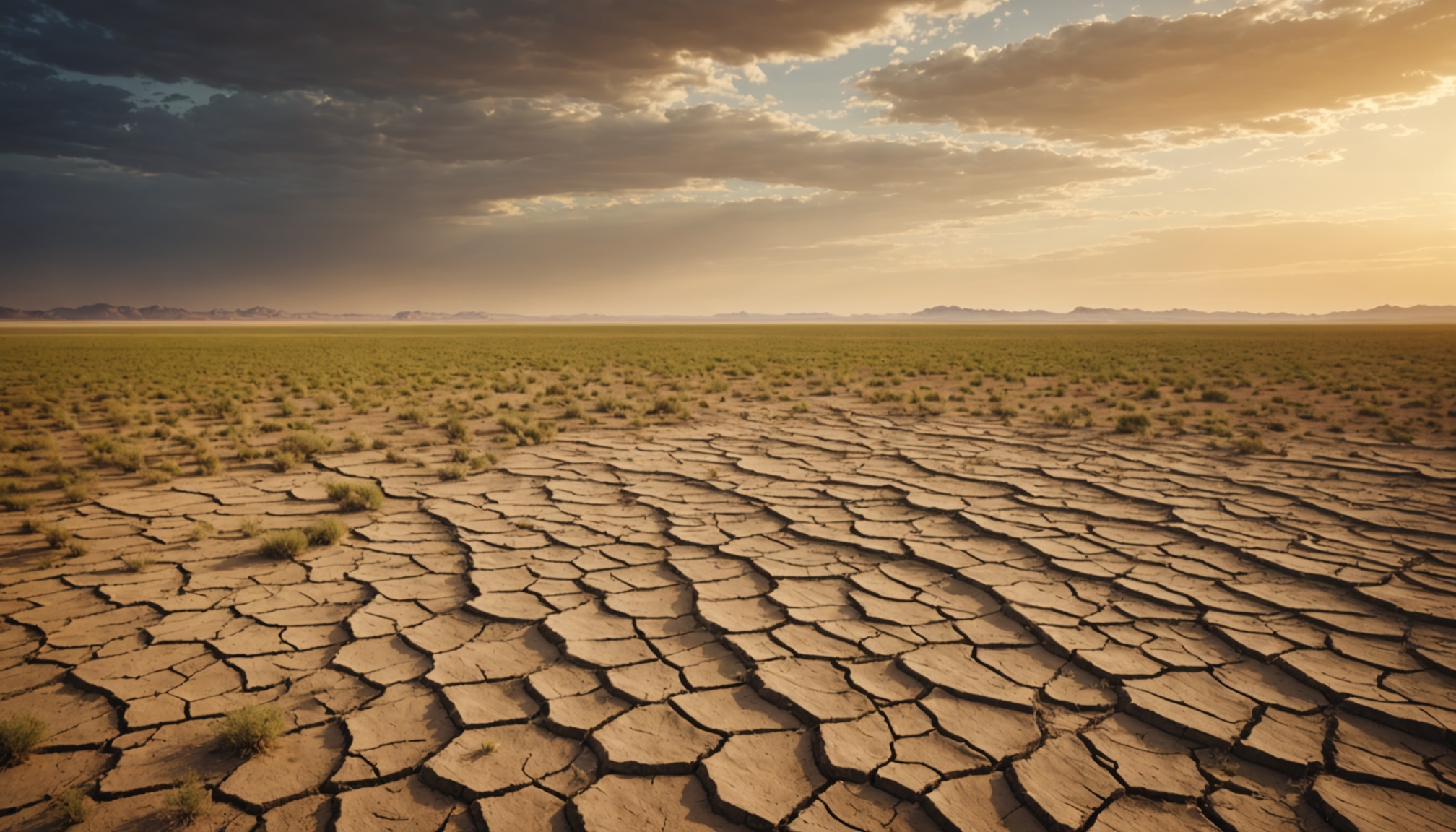
The UN summit on desertification in Mongolia concluded on August 29 in Ulaanbaatar, after twelve days of negotiations bringing together 197 Parties—196 countries and the European Union—around a shared goal: turning three decades of commitments into measurable results on the ground. The 17th Conference of the Parties to the United Nations Convention to Combat Desertification (COP17) wraps up with a financial announcement that is dominating the headlines, but also with an issue that has remained stalled since the previous summit.
A Host Country Facing Its Own Degraded Land
The choice of Ulaanbaatar as host city was no accident. Mongolia is among the countries most affected by land degradation, with nearly 77% of its territory affected, according to figures put forward by the organizers. Its steppes, which sustain generations of nomadic herders, face the combined pressure of overgrazing, dust storms, and more frequent drought. Under the slogan “Restore the land, restore hope,” delegations spent two weeks working to give concrete substance to this ambition. Mongolia's Prime Minister, Nyam-Osoryn Uchral, summed up the stakes by calling on participants to “turn words into action.”
A Financial Commitment Presented as Progress
In terms of figures, the conference is mainly remembered for the announcement of roughly $1.3 billion in new or already committed funding, earmarked for land restoration and drought resilience projects in 23 countries across five continents. Mongolia's Deputy Prime Minister, Togmid Dorjkhand, for her part cited government pledges exceeding $1 billion, to which private investment intentions of roughly an additional $1.3 billion would be added—figures stated by Mongolian authorities, separate from the official financial tally released by the convention's secretariat. This plan comes as the annual funding need to combat land degradation is estimated at roughly $355 billion, against barely $70 billion actually available each year: a gap that COP17 did not close, but at least sought to document precisely.
This kind of monetary agreement, struck on the sidelines of a multilateral forum, is not an isolated case: on an entirely different scale, the region had already seen Ghana and Morocco seal eleven strategic partnership agreements this year, evidence that bilateral economic diplomacy sometimes moves faster than global climate negotiations.
The Drought Protocol, Still Pending
The most delicate point of the discussions remained unresolved. A binding global text on drought, which had already stalled midway at the previous summit in Riyadh, likewise failed to come to fruition in Ulaanbaatar. The Parties remain divided over the legal form such an instrument should take. This is simply an observation of deadlock: nothing indicates at this stage whether, or when, a binding agreement might be reached at a future session.
Cities Take a Seat at the Table in Land Diplomacy
The other notable outcome of this summit, less discussed than the financial component, concerns the local level. About thirty mayors, governors, and regional officials adopted the Ulaanbaatar Declaration, committing to strengthen sustainable land management and drought resilience in their territories, while calling for a more permanent role for cities and regions in the convention's process. These local officials plan to establish, within 90 days, a network of cities located in arid or climatically extreme zones. This growing influence of local governments in international negotiations echoes a dynamic already observed elsewhere, as shown by the municipal biodiversity atlas led by residents at the scale of their own village.
What This Means in Practice
For now, COP17 concludes with financial commitments announced, though their actual disbursement remains to be verified in the coming months: this is the point that distinguishes a promise from an achieved result. The gap between funding needs and the amounts actually mobilized echoes observations already made by development actors, particularly on the African continent, which is especially exposed to the climate funding issue. More broadly, this summit is part of a series of closely spaced environmental warnings, following the latest report from European scientists on record ocean heat. The next milestone to watch will be the ability of the 23 beneficiary countries to turn these announcements into concrete land restoration projects, a matter that falls squarely under the Planet and Economy categories, two themes at the very heart of this issue.
Frequently Asked Questions
What is COP17 on desertification?
It is the 17th Conference of the Parties to the United Nations Convention to Combat Desertification, which brings together 197 Parties to coordinate action against land degradation and drought. The 2026 edition was held from August 17 to 29 in Ulaanbaatar, Mongolia.
How much money was pledged at the end of the summit?
The convention's secretariat reported roughly $1.3 billion in new or soon-to-be-finalized funding, earmarked for 23 countries across five continents. Additional statements from Mongolian authorities cite higher amounts when factoring in private investment intentions.
What role for cities was discussed in Ulaanbaatar?
About thirty local and regional officials adopted the Ulaanbaatar Declaration, which commits them to sustainable land management and calls for creating, within 90 days, a network of cities located in arid zones.
Sources
UNCCD – 17th session of the Conference of the Parties
Euronews – COP17 in Mongolia wraps up with 1.3 billion dollars of Green Investment Pledge
The Conversation – COP17 in Mongolia: Land Diplomacy Put to the Test by the Crisis of Environmental Multilateralism
This article was written with the help of artificial intelligence. Editorial policy