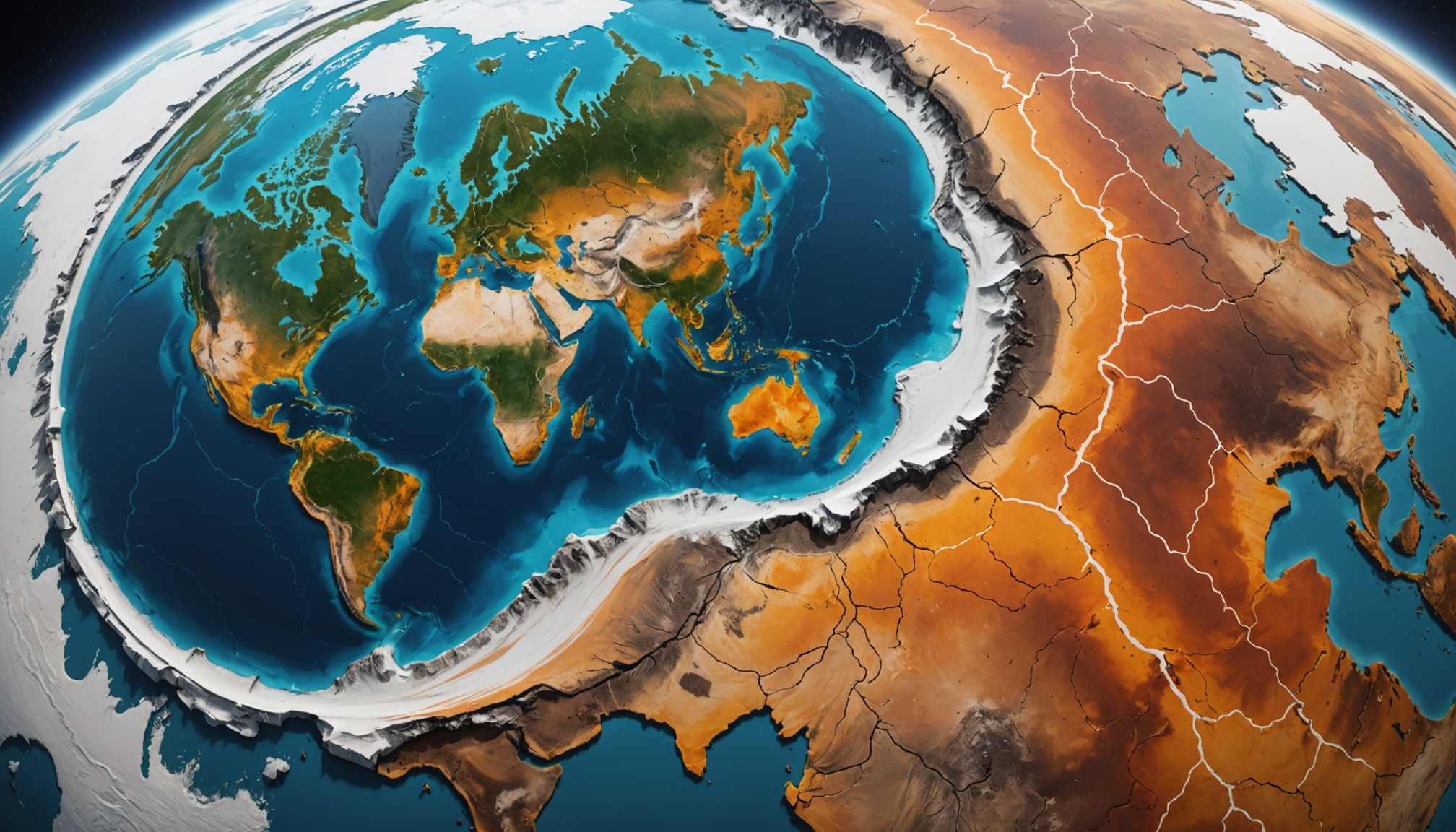
The latest report from the United Nations Environment Programme (UNEP) has made the global climate trajectory look even worse. Published on October 21, the Emissions Gap Report concludes that even if every country fully honored its greenhouse gas reduction commitments, the planet would still be heading toward warming of 2.6°C above preindustrial levels by the end of the century. That figure is up from last year's projections, which still put the range at 2.3 to 2.5°C.
A Scenario Revised Upward
UNEP's assessment is blunt: the possibility of keeping warming under the symbolic threshold of 1.5°C has now disappeared, after several decades of climate action deemed insufficient. The report's authors point in particular to the responsibility of the G20 countries, which alone account for nearly three-quarters of global greenhouse gas emissions. This diagnosis echoes findings reported in recent months on the degradation of natural habitats in France, where several hundred animal and plant species are already being closely monitored.
Why the Gap with the Targets Keeps Widening
The report precisely quantifies the gap between current commitments (the “nationally determined contributions,” or NDCs) and what would be required for a sustained return below 1.5°C:
- Current NDCs would cut global emissions by only 5 to 8% by 2030 and 11 to 15% by 2035, compared with 2025 levels.
- To have any hope of returning below 1.5°C after a temporary overshoot, emissions would instead need to fall by about 18% by 2030, 45% by 2035, and 69% by 2040.
- The 2026 report turns out to be more pessimistic than last year's, a sign that the gap between promises and action keeps widening rather than narrowing.
What the Real-World Consequences Are
This shift isn't just a matter of curves and degrees: every additional tenth of a degree affects the frequency of heat waves, water availability, and the stability of ecosystems. The strain already observed in certain groundwater tables in France illustrates how climate disruption is adding to pressures already weighing on natural resources. UNEP's report is published just weeks before COP31, where negotiators will have to take a position on this alarming assessment rather than discover it on site.
For citizens and local governments alike, UNEP's message is a call not to wait for a hypothetical international turnaround: local initiatives to protect ecosystems, like those that led to Marseille being named France's biodiversity capital, remain a concrete lever for action independent of the international negotiating calendar.
Frequently Asked Questions
What is UNEP's Emissions Gap Report?
It is an annual report from the United Nations Environment Programme that compares the climate commitments actually made by countries (the NDCs) with what would be needed to meet the goals of the Paris Agreement.
Is the 1.5°C Threshold Now Permanently Out of Reach?
According to the report, a temporary overshoot of this threshold is now nearly unavoidable. A return below 1.5°C after an overshoot remains theoretically possible, but only with much steeper emissions cuts than those promised today.
Why Is This Report Released Just Before COP31?
UNEP publishes its assessment every year before the UN climate conference, specifically so that countries can negotiate with full knowledge of the facts and, in theory, revise their commitments upward.
Sources
UNEP – Emissions Gap Report 2026
La Croix
L'Energeek
This article was written with the help of artificial intelligence. Editorial policy