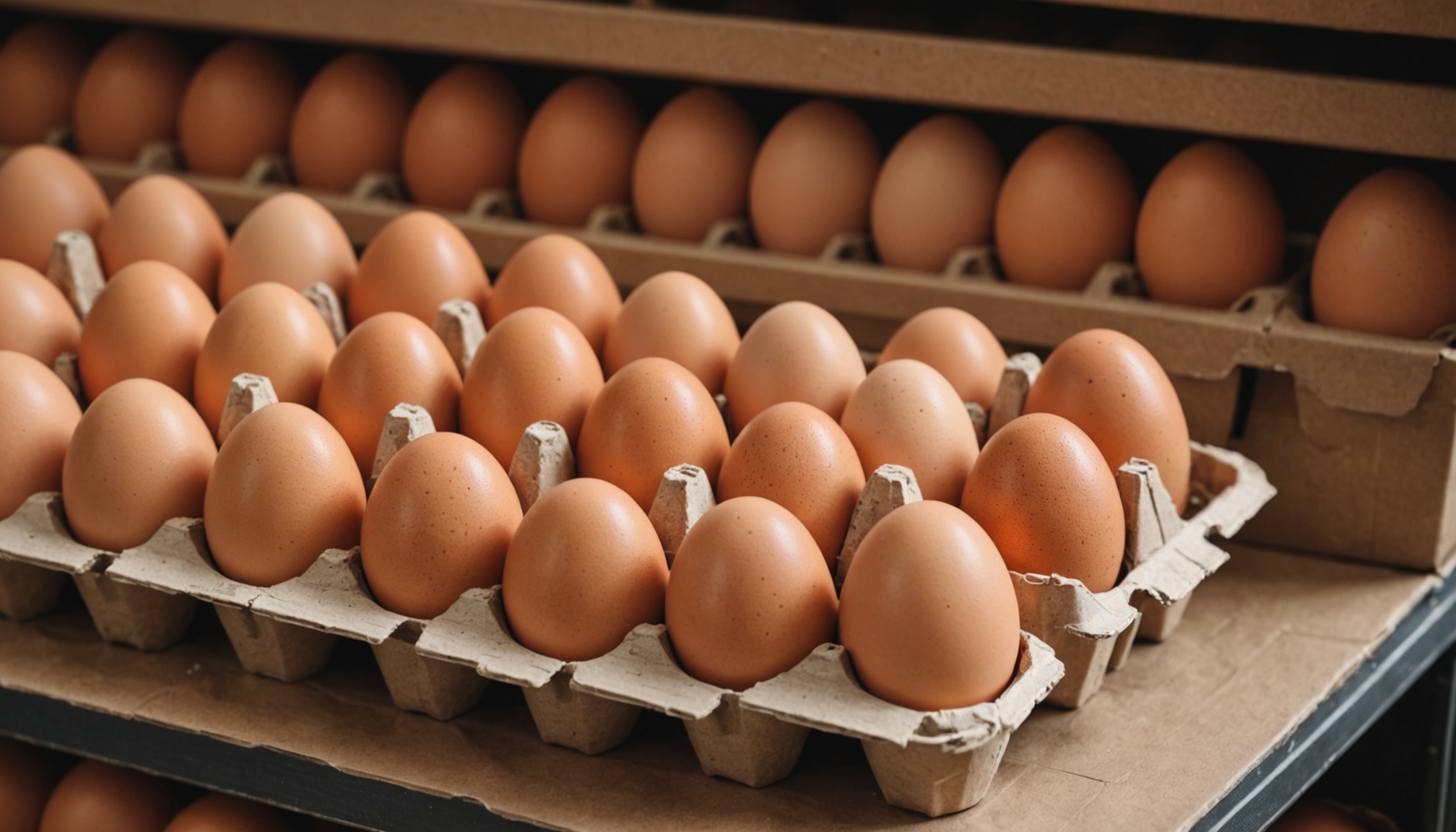
Long considered the cheapest protein on the shelf, eggs are changing status. All across France, the price of eggs is climbing, to the point that this staple is starting to catch up with other fresh products whose prices have already risen sharply in recent years. Behind this increase lies a very specific market mechanism, along with some surprising differences from one region to another.
A price increase that surprises consumers
A carton of 12 eggs now costs an average of 3.80 euros in French supermarkets, with major disparities: expect to pay around 2.40 euros in the Champagne-Ardenne region, versus up to 4.40 euros on the French Riviera. That's a price gap of more than double, explained by transport costs, the density of local supply, and buying habits specific to each population center.
This price increase comes as egg consumption has never been higher: the French now buy the equivalent of 235 eggs per person per year, up from 224 a few years ago. Faced with soaring meat prices, eggs are still seen as the most affordable protein, which keeps fueling ever-rising demand.
Why prices are soaring despite abundant supply
The egg industry follows a rule well known to agricultural economists: a drop of just 1% in egg availability can be enough to push prices up by 6% to 7%. Several factors are currently compounding one another:
- Past outbreaks of avian flu, which temporarily reduced the laying hen population, with effects that linger for several months while farms rebuild their flocks.
- Structurally stronger demand, as households turn to eggs to offset the cost of other protein sources.
- Rising production costs for farmers (animal feed, energy, bringing buildings up to code), gradually passed on to the sale price.
On the industry side, wholesale prices have nonetheless started to stabilize in recent weeks, a sign that the pressure could ease by the end of the year if no new health crisis disrupts production.
Disparities that raise questions about purchasing power
For a consumer budget already under strain, these regional variations are far from trivial. They add to a growing list of fresh products — fruit, fish — whose prices keep climbing on store shelves, forcing many households to rethink their shopping habits or compare stores more carefully before filling their cart.
This situation also illustrates a broader phenomenon in France's food economy: a raw material seen as ordinary can see its price double from one region to another, simply based on logistics and local competition between retailers.
How to limit the impact on your budget
- Compare prices across several stores before buying: the regional gap observed also shows up between stores within the same city.
- Favor short supply chains or local markets when possible, since prices there follow wholesale trends less directly.
- Watch for occasional promotions, which are common for this high-turnover product.
- For regular needs (baking, family cooking), buying larger packs is often more economical per unit.
Households can also check their local municipality's service pages or consumer associations, which regularly publish local price comparisons.
Frequently Asked Questions
Why are egg prices rising when production remains high?
The egg market is highly sensitive to small shifts in supply: a drop in availability of just 1% can trigger a price increase of 6% to 7%, an effect amplified by steadily rising consumer demand.
Is the price of eggs the same everywhere in France?
No, regional differences are significant: a carton of 12 eggs can cost around 2.40 euros in some regions and more than 4.40 euros elsewhere, particularly along the Mediterranean coast, due to logistics costs and local competition between retailers.
Will prices keep rising?
Wholesale prices in the industry have recently shown signs of stabilizing. A lull is possible by the end of the year, barring a new avian flu outbreak or a shock to production costs that would once again weigh on the industry.
Sources
Réussir.fr — Eggs: the decline in industrial prices continues
Combien-coute.net — Price of a carton of 12 eggs in France in 2026
Boursorama — Should we worry about a lasting egg shortage?
This article was written with the help of artificial intelligence. Editorial policy