Faced with the steady rise in the cost of living, a growing number of French people are changing the way they consume. Instead of buying, they borrow, rent, or share. This shift toward use rather than ownership is emerging as one of the most concrete responses to the high cost of living, and exchange volumes confirm the scale of the phenomenon: France's sharing economy market is estimated at 47 billion euros in 2026, up from 28 billion in 2021.
Borrowing Instead of Buying: An Accelerating Trend
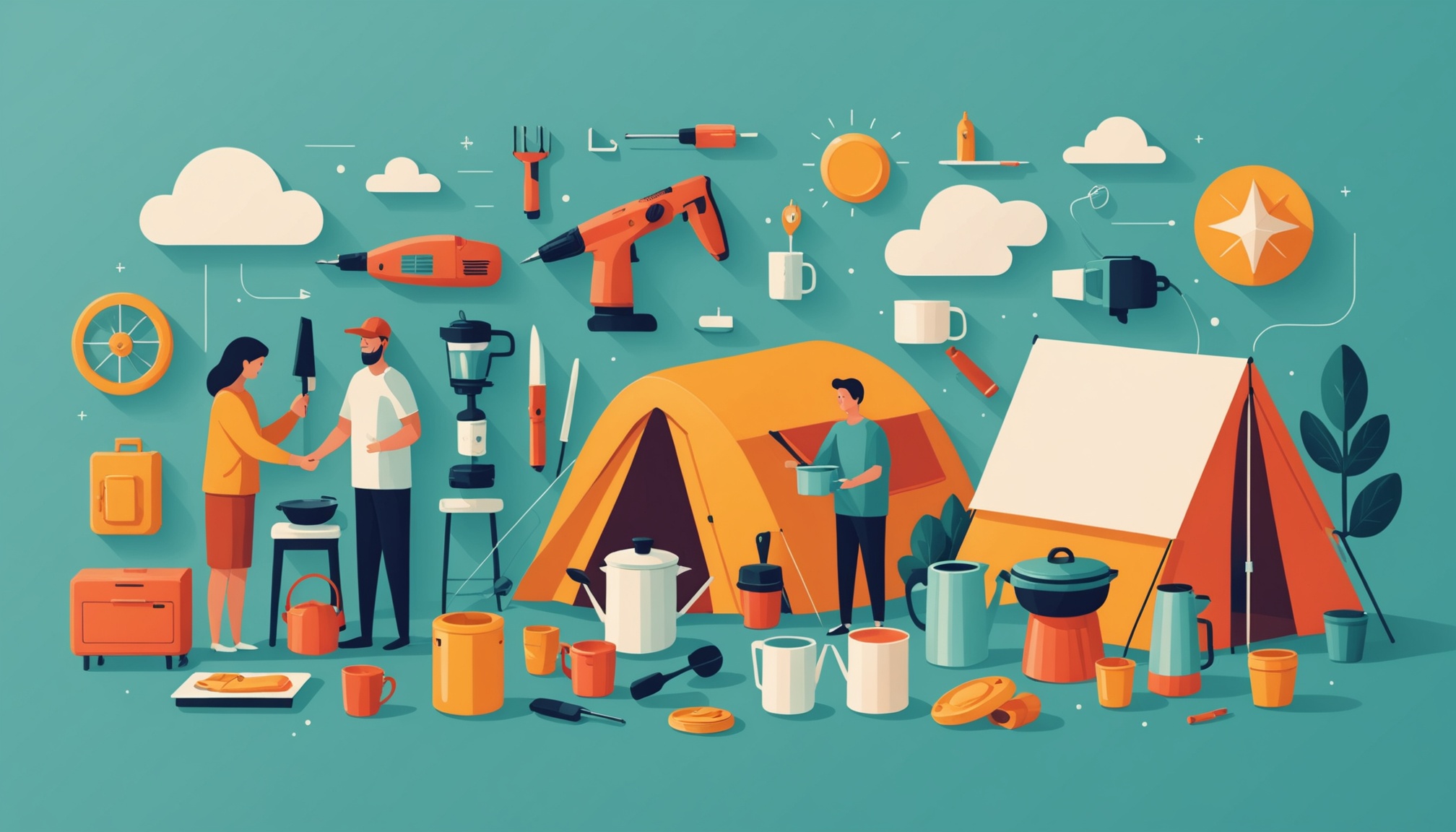
The logic is simple: why buy an item you'll only use two or three times a year? Apps like Poppins already let people borrow or rent thousands of everyday items from one another, with more than 20,000 items currently available for sharing across France: drills, tents, raclette makers, and DIY or gardening equipment. This grassroots response to pressure on purchasing power complements the more conventional tools households have already adopted to save money.
The sector is no longer limited to individual items: home sharing between private individuals, carpooling, shared mobility, and professional equipment rental are all part of this broad shift toward collaborative consumption, fueled by the growing number of specialized platforms.
A Choice That's Both Eco-Friendly and Economical
Beyond the financial angle, favoring use over ownership limits the production of new goods and extends the lifespan of items that already exist. This argument carries more and more weight in consumer choices, even as traditional brick-and-mortar retail is also trying to adapt to the purchasing-power crisis.
- Fewer unnecessary purchases: a shared item prevents several redundant individual purchases.
- Immediate savings on items that are expensive to buy but rarely used (tools, camping gear, DIY equipment).
- A complement to already familiar solutions like cashback to regain purchasing power on everyday purchases.
- A local, community-based economy that relies on trust between individuals rather than big retail chains.
The Limits of a Still-Young Model
Sharing between individuals requires a level of organization that not everyone is ready to embrace: availability to pick up or return an item, checking the condition of the equipment, and building trust with strangers. Platforms rely on rating systems and sometimes deposits to secure exchanges, but for now the model remains far from replacing conventional purchases for most everyday products. Instead, it is establishing itself as a complement, particularly effective for items used only occasionally.
Frequently Asked Questions
Does the sharing economy only cover physical items?
No. The scope also includes home sharing between private individuals, carpooling, shared mobility, and professional equipment rental, in addition to borrowing or renting everyday items.
Why is this way of consuming growing so much?
Pressure on purchasing power is pushing households to look for alternatives to buying new, while the growing number of platforms makes it easier to connect individuals and secures exchanges.
Can this model replace conventional purchases?
Not entirely: it remains best suited to items used only occasionally. For everyday goods used frequently, conventional buying still has the edge.
Sources
This article was written with the help of artificial intelligence. Editorial policy