Every fall brings its share of new resolutions, but 2026's back-to-school season is shaping a distinctive lifestyle among the French: fairly solid personal morale, a very bleak view of the country, and a frugal mindset that is settling in without much fanfare, through small everyday decisions.
An Acknowledged Paradox Between Personal and Collective Life
According to an Elabe survey published in late August 2026, 69% of French people say they are doing well personally, a figure that contrasts sharply with the 89% who believe France, as a country, is not doing well. Worry (63%), exasperation (41%), and anger (38%) dominate when it comes to the national situation, with purchasing power cited as the top concern (48%). A direct consequence: 79% of respondents say they have to tighten their belts this fall, including 26% who say “a lot.” This retreat into the private sphere doesn't stop some French people from continuing to scale back their vacations without giving up traveling altogether, rather than sacrificing everything.
Frugality Advancing Through Small, Concrete Steps
This climate shows up in consumer habits. Each year, the Ademe (the French agency for ecological transition) and the ObSoCo institute survey roughly 4,000 representative French people aged 18 to 75 on six areas: mobility, tourism, food, consumption, digital habits, and housing. The finding that emerges is not a sweeping moralizing shift, but a frugality that is gradually taking hold, driven more by financial trade-offs than by activist conviction. This trend echoes what has already been observed around digital disconnection, where cutting back on screen time also reflects a search for well-being at a lower cost.
Insee Examines the Time the French Devote to Their Households
Another sign of this shift toward the personal: since October 13, 2025, Insee (the French national statistics institute) has been conducting a major decennial time-use survey in person with roughly 20,000 households. Family support, time spent in front of screens, remote work, leisure: this snapshot is meant to shed light on how the French are reorganizing their days at a time when everyday life has become the main arena in which they still feel a sense of control.
The Return of Warm, Cozy Interiors
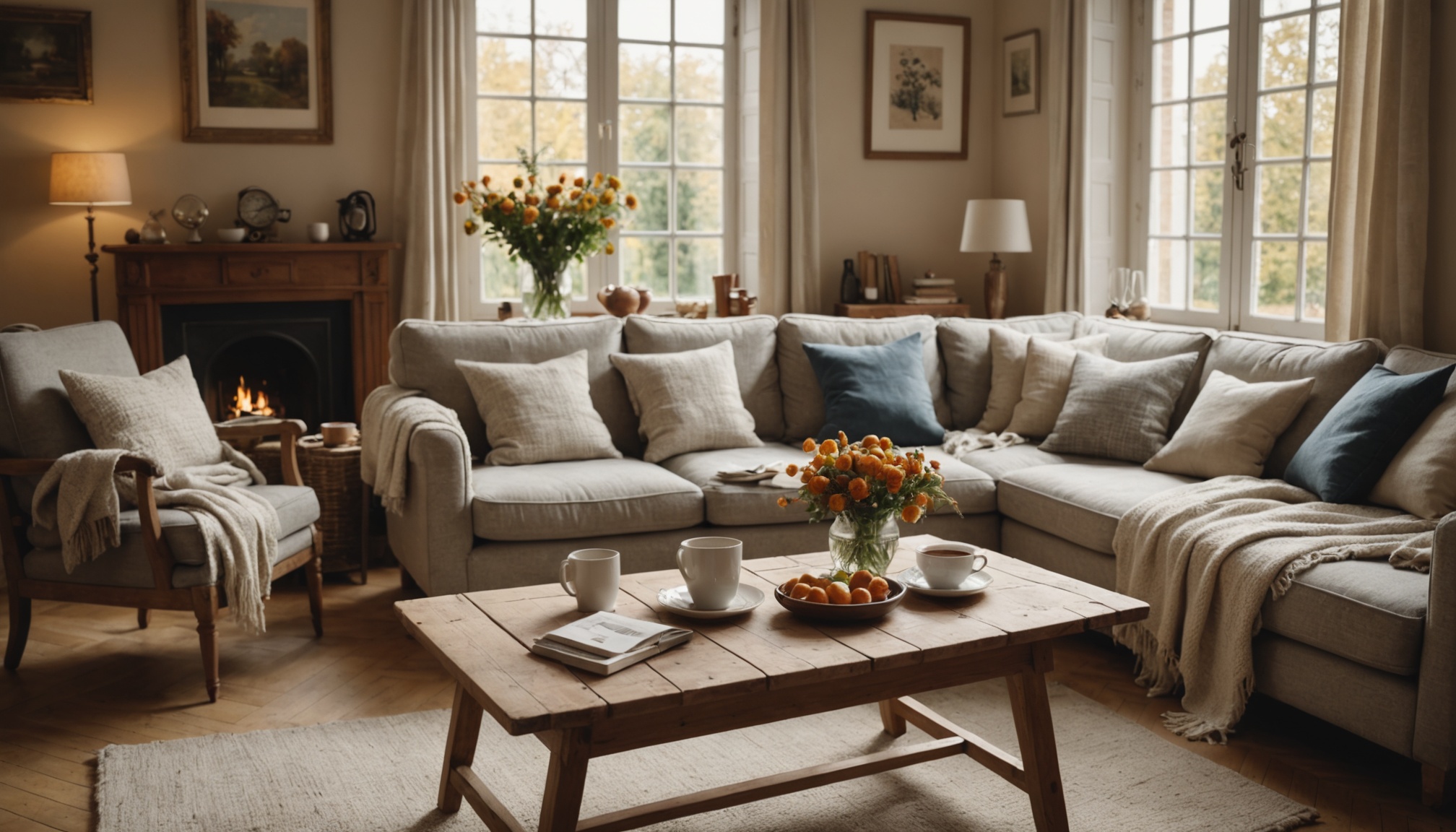
This retreat into the domestic sphere also shows up in decorating choices. Industry professionals are seeing a clear return to warmer, more personalized interiors: cold minimalism is giving way to natural materials, deeper colors, and secondhand finds that tell a story. It's a movement that extends, in its own way, the enthusiasm for the art of tidying and reorganizing one's home observed in recent months.
Key Takeaways
- A deceptive sense of morale: high personal well-being (69%), but a very negative view of the country's situation (89%).
- Purchasing power tops the list of concerns, with 79% of French people tightening their budgets.
- Gentle frugality measured every year by Ademe and ObSoCo across six areas of everyday life.
- A major Insee time-use survey of 20,000 households, launched in October 2025.
Frequently Asked Questions
Why do French people say they're doing well personally but feel pessimistic about the country?
The Elabe survey shows that individual well-being (69%) is mainly based on close relationships and living conditions, while judgments about the national situation (89% view it negatively) reflect broader concerns such as purchasing power, security, and public debt.
What exactly does the Ademe-ObSoCo barometer measure?
Each year, roughly 4,000 French people aged 18 to 75 are surveyed on six areas of their daily lives: mobility, tourism, food, consumption, digital habits, and housing, in order to measure the real evolution of their frugal habits.
What is the purpose of Insee's Time Use survey?
Conducted in person with roughly 20,000 households since October 2025, this decennial survey measures how the French divide their time between work, family support, screens, and leisure, to better understand changes in lifestyle.
Sources
- AgNet — Fall 2026: The Paradox of French Morale (Elabe Survey)
- SIA News — The French Lifestyle This Fall, Between Cozy Interiors and Embraced Frugality
This article was written with the help of artificial intelligence. Editorial policy