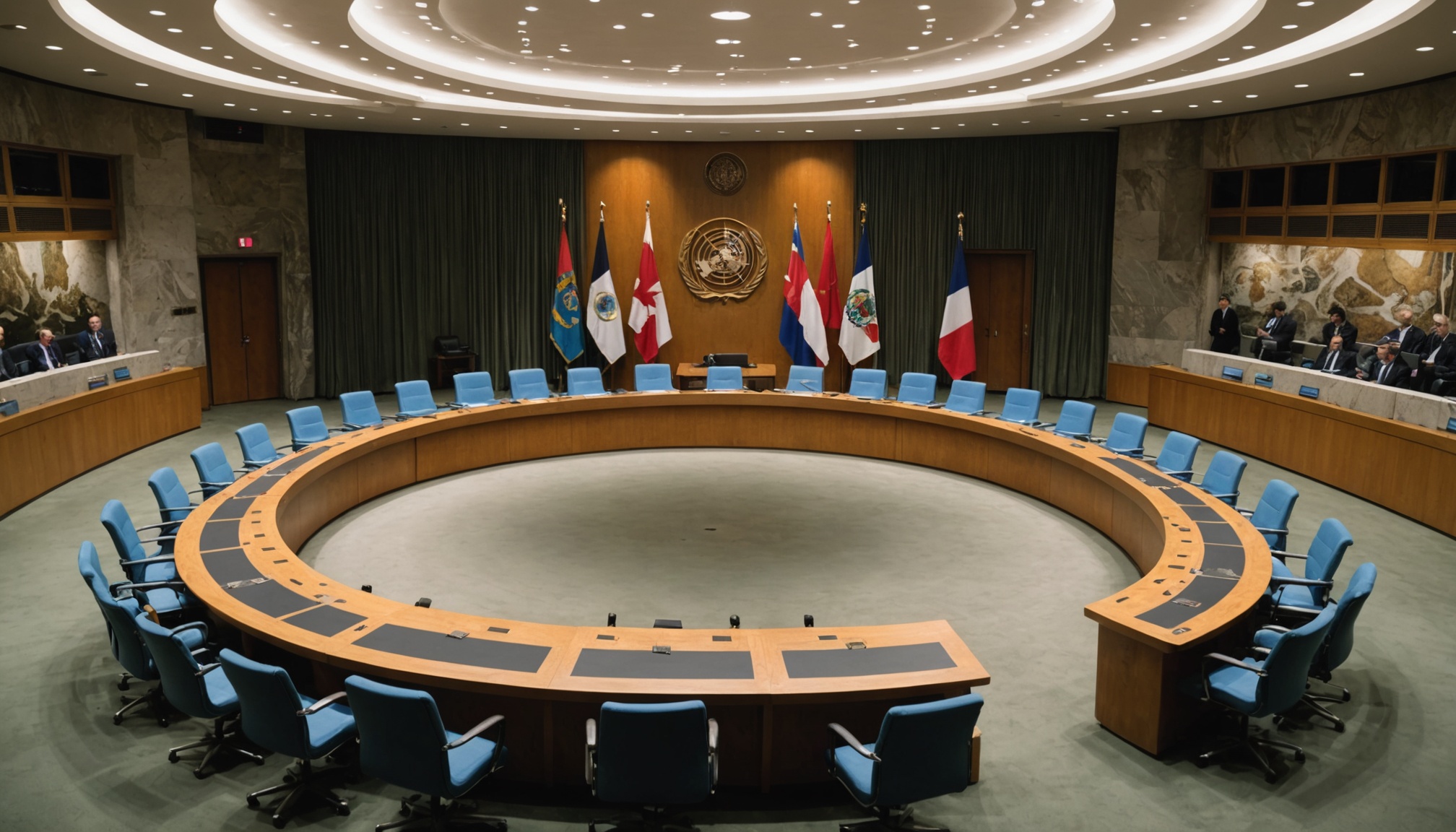
Since September 1, France has held the presidency of the UN Security Council for one month, a responsibility that rotates among each of the fifteen members of the body. This is far from a symbolic exercise: the mandate coincides with the opening of the 81st session of the General Assembly and its high-level week, one of the busiest moments on the global diplomatic calendar.
A Rotating Presidency, a Packed Agenda
The presidency of the Security Council changes each month according to the English alphabetical order of the fifteen members: France succeeds Denmark and will hand over to Greece in October. This role gives Paris responsibility for organizing the Council's work, convening meetings, and ensuring the orderly conduct of discussions on the crises on the agenda — a diplomatic organization also found, on a different scale, behind major multilateral summits like the SCO summit in Bishkek.
Four Priorities Set Out by Paris
France's Permanent Representative to the United Nations, Jérôme Bonnafont, laid out the four priorities for this mandate at a press briefing on September 1: Ukraine, the Middle East, peacekeeping reform, and the fight against terrorism. France said it stood ready to convene emergency meetings on Ukraine and the Middle East as soon as the situation required, calling them “priorities for France.” Support for Lebanon is also among the month's priority areas of action.
An Agenda Set Through the End of September
Several deadlines punctuate the month: the renewal of the sanctions regime on Sudan (September 10), a vote on the panel of experts on the Iranian file (September 17), and a review of the mandate of the gang-prevention force in Haiti (September 29). A thematic debate on peacekeeping reform is scheduled for September 18, followed on September 25 by the presentation of the UN High Commissioner for Refugees' annual report. On September 11, a special discussion on counterterrorism will mark the 25th anniversary of the September 11 attacks in New York.
France Is Also Pushing for Veto Reform
Beyond the day-to-day management of crises, the French presidency is highlighting the French-Mexican initiative aimed at limiting the use of the veto by permanent members in cases of mass atrocities — a text now backed by 122 states. Paris also intends to defend the status of French as a full working language within the Council, alongside English. This kind of multilateral initiative recalls other recent attempts to shape global diplomatic balances, such as the international space summit organized by Paris or efforts by countries like Uzbekistan to assert their place on the international stage.
- September 1 to 30: France's month-long presidency of the Security Council
- 4 priorities: Ukraine, the Middle East, peacekeeping, counterterrorism
- 122 states support the French-Mexican initiative to limit the veto
- September 11: special debate for the 25th anniversary of the New York attacks
For more foreign policy analysis, visit our Politics section, and follow major multilateral events in our International News section.
Frequently Asked Questions
Why is France presiding over the Security Council in September?
The presidency of the Security Council rotates each month among the fifteen members, following the English alphabetical order of their names. France holds this role in September 2026, after Denmark and before Greece.
What does a country presiding over the Security Council actually do?
The presiding country organizes the meeting agenda, convenes the Council in the event of an urgent crisis, and ensures debates run smoothly. It does not have any additional powers over the substance of decisions, which remain voted on collectively by the members.
What is the French-Mexican initiative on the veto?
This is a text jointly put forward by France and Mexico, calling on permanent members of the Security Council to refrain from using their veto in situations of mass atrocities. It is currently backed by 122 UN member states.
Sources
diplomatie.gouv.fr ·
press.un.org ·
congoquotidien.com
This article was written with the help of artificial intelligence. Editorial policy