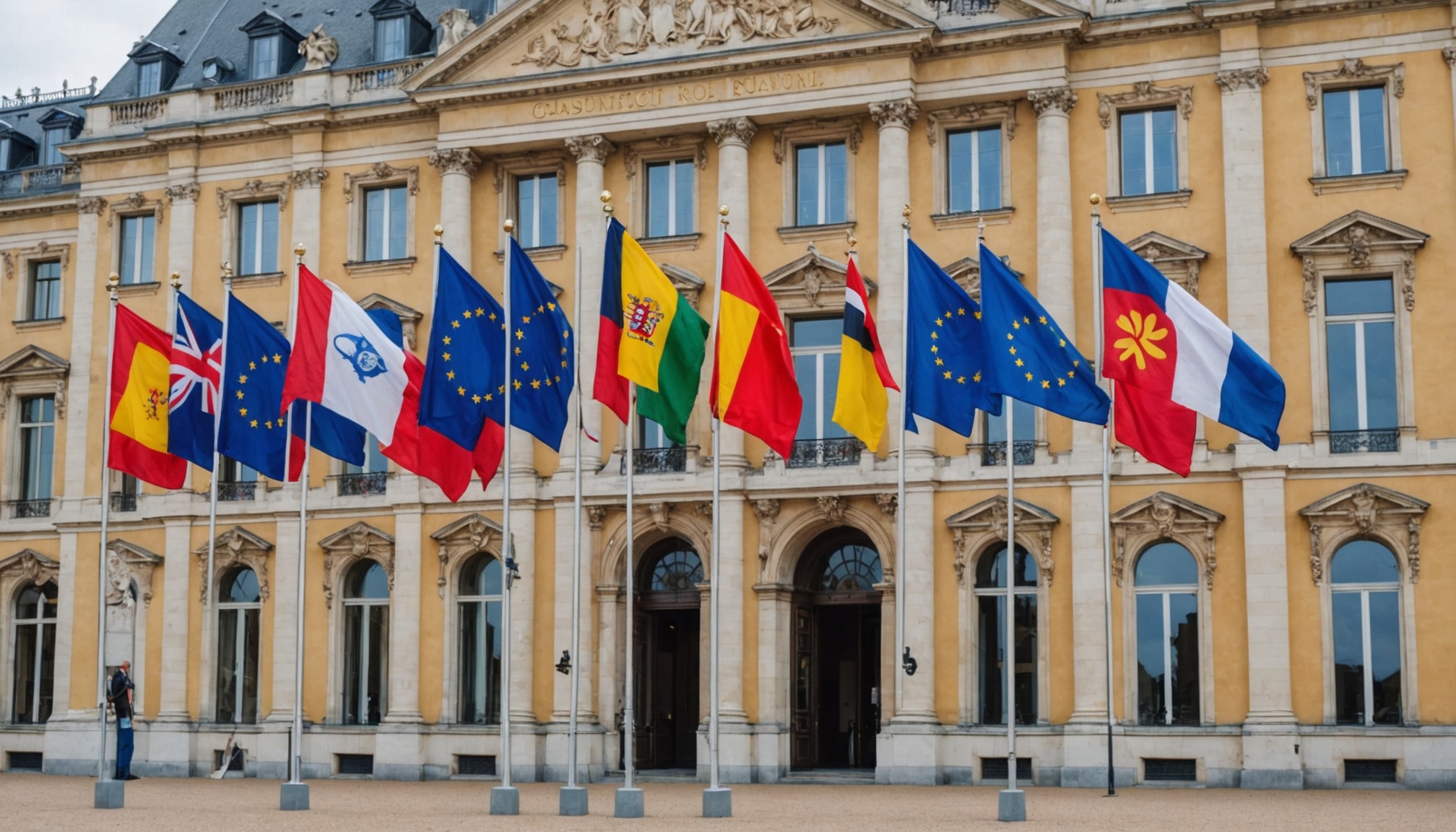
Twenty-two member countries, but only ten heads of state or government in attendance: the 30th Ibero-American Summit, which opened Wednesday in Madrid under the patronage of King Felipe VI, illustrates on its own the fragility of a diplomatic format three decades old. The surprise arrival of Ukrainian President Volodymyr Zelensky, who came seeking support to rebuild his country's power grid, captured the cameras' attention — but it should not obscure the underlying question: what purpose does this annual gathering between Spain, Portugal, and Latin America still serve?
A Format Seeking to Regain Influence
Created thirty years ago to strengthen ties between Spain, Portugal, and their former Latin American colonies, the Ibero-American Summit long served as a shared platform on economic, cultural, and migration issues. But its ability to mobilize is eroding: of the twenty-two member countries, only ten were represented by their top leader this year, including Argentina's Javier Milei, Chile's José Antonio Kast, and Guatemala's Bernardo Arévalo. This format is reminiscent of other major multilateral gatherings recently scrutinized for their real weight, such as the BRICS Summit in New Delhi or the SCO Summit in Bishkek.
Zelensky in Madrid: Energy-Crisis Diplomacy
It was in this context that Volodymyr Zelensky landed in Madrid on Wednesday for a series of bilateral meetings, notably with Spanish Prime Minister Pedro Sánchez and King Felipe VI. His message to Latin American leaders was direct: help repair Ukraine's power grid, badly damaged by Russian strikes as winter approaches, and strengthen international cooperation around the country's reconstruction. This appearance, which was not on the original agenda, allowed the summit to regain media visibility it had struggled to attract in recent years — somewhat the way the French rotating presidency of the UN Security Council had helped bring certain issues back onto the international agenda.
What the Summit Put on the Table
- Bilateral talks between Ukraine and several Latin American delegations on humanitarian and energy aid;
- A plenary session devoted to reviving the Ibero-American format itself, which several diplomats cited in the Spanish press consider to be losing momentum;
- The official photo of the delegations at the Royal Collections Gallery, the protocol highlight of the summit;
- Economic and cultural exchanges between Spain, Portugal, and their Latin American partners, in keeping with previous editions.
Why This Edition Still Matters
Beyond the image of a format running out of steam, this 30th summit demonstrated its ability to remain a useful crossroads for parallel diplomacy: it is often on the sidelines of these major gatherings, more than in their final declarations, that the most concrete discussions take place. Zelensky's presence, like that of other visiting heads of state, confirms that these multilateral summits retain value as a diplomatic go-between, even as their direct institutional reach diminishes — a dynamic already observed at the UN biodiversity summit in Yerevan.
Frequently Asked Questions
What is the Ibero-American Summit?
It is an annual meeting that brings together Spain, Portugal, and twenty Latin American countries around shared economic, cultural, and political issues, rooted in the historical and linguistic ties between the two continents.
Why did Volodymyr Zelensky attend this summit?
He took advantage of the presence of numerous Latin American leaders in Madrid to appeal for help rebuilding Ukraine's power grid, damaged by Russian strikes, and to strengthen diplomatic ties with the region.
Does the Ibero-American format still have a future?
Its direct institutional reach is being debated, with declining participation from heads of state, but it continues to serve as an informal framework for bilateral discussions that would not always find another platform.
Sources
- Africanews — Ibero-American Summit in Madrid: the 30th edition brings together 22 countries
- Euronews — Zelenskyy urges Latin American leaders to help repair Ukraine's power grid
- Observatoire de l'Europe — Madrid hosts the 30th Ibero-American Summit
This article was written with the help of artificial intelligence. Editorial policy