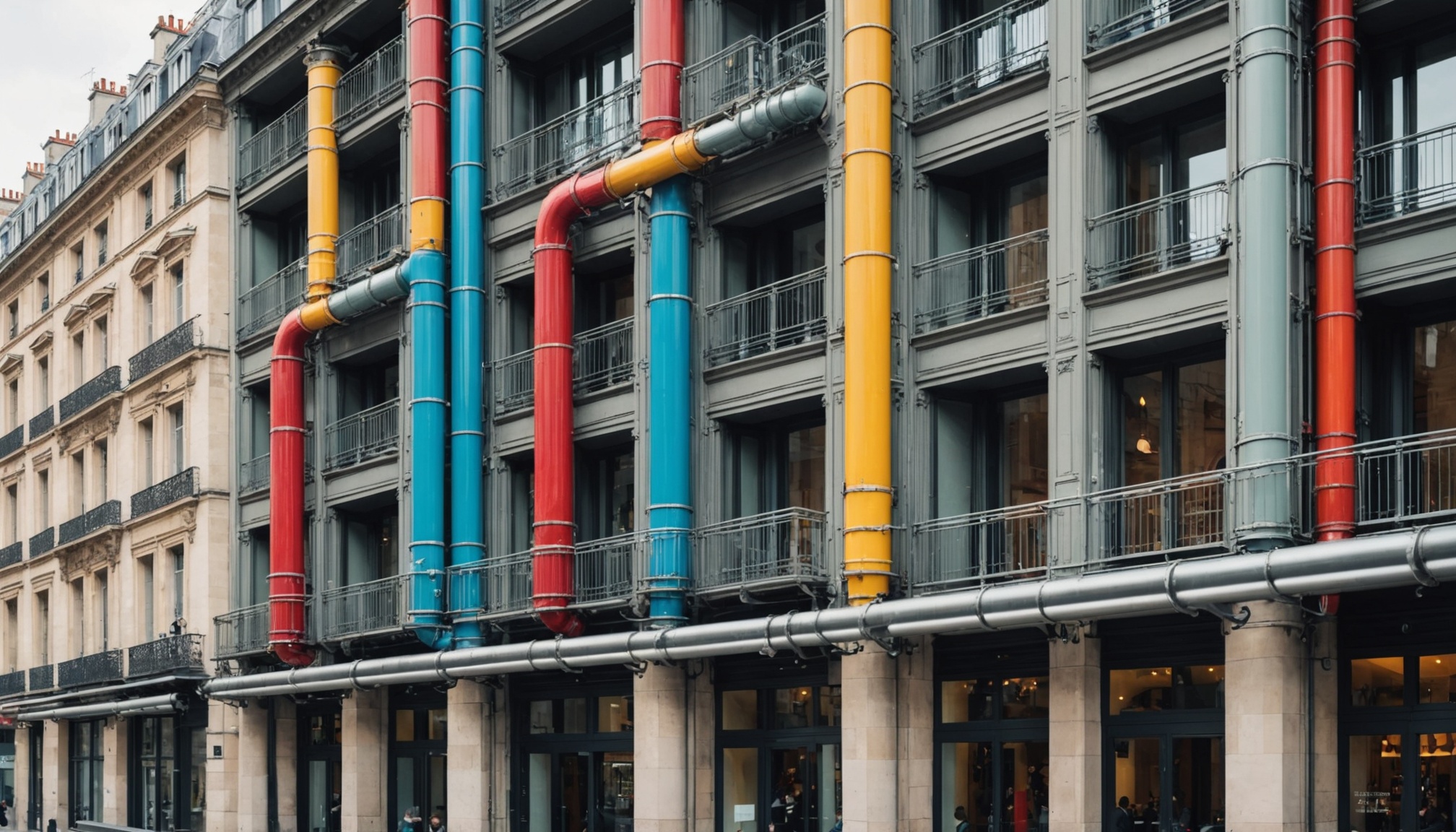
As it approaches its fiftieth anniversary, the Centre Pompidou has just received a new form of heritage recognition. Its main building and the piazza bordering it are now listed as historic monuments, a powerful symbolic gesture for a building long regarded as an “anti-monument.”
A listing finalized during a full closure
The order was signed on October 23, 2026, by the prefect of the Île-de-France region, and the news was made public on October 28 by the Ministry of Culture. This listing follows a unanimous vote by the Regional Commission for Heritage and Architecture (CRPA) at its session on April 16, 2026.
In practical terms, a listing (“inscription”) is a less restrictive protection status than full classification as a historic monument: it requires an administrative review before any substantial modification, without the stricter obligations reserved for classified works.
A symbol arriving in the middle of the “Pompidou 2030” project
The building, closed to the public since September 22, 2025, is at the heart of a vast renovation project called “Centre Pompidou 2030.” The project, entrusted to the agencies AIA, Moreau Kusunoki, and Frida Escobedo, is valued at approximately 463 million euros. It notably includes complete asbestos removal, environmental upgrades, and the creation of a 10,000-square-meter forum bringing together performance halls, exhibition spaces, and movie theaters.
The reopening is planned for 2030, a year that will also mark the fiftieth anniversary of the building's inauguration. It was designed by Renzo Piano, Richard Rogers, and Gianfranco Franchini and opened in 1977.
Why this listing matters
- It officially recognizes the architectural value of a building long considered controversial for its visible industrial aesthetic.
- It comes while the site is fully closed, which ensures that the ongoing work will respect the building's protected features.
- It is part of a broader movement to highlight twentieth-century heritage, which is often less protected than older monuments.
This trend of mobilizing private and public resources around endangered heritage can also be seen in other recent initiatives, much like the funding mechanisms for maintaining French monuments that have been multiplying in recent months.
Until 2030, Parisian cultural life will continue to rely on other major institutions and exhibitions to keep the capital culturally attractive while one of its most visited museums in the world remains closed.
Frequently Asked Questions
Is the Centre Pompidou now classified as a historic monument?
No, it is listed, which is a more flexible protection status than classification: it requires administrative review before any major modification, without the stricter requirements of full classification.
When will the Centre Pompidou reopen?
The reopening is planned for 2030, following a renovation project estimated at approximately 463 million euros, led by the agencies AIA, Moreau Kusunoki, and Frida Escobedo.
Why is this listing happening now?
It coincides with the approaching fiftieth anniversary of the building, inaugurated in 1977, as well as its renovation project, which has been underway since it closed in September 2025.
Sources
- Batiactu – Le Centre Pompidou désormais inscrit au titre des monuments historiques
- Le Journal des Arts – La consécration d'un « anti-monument »
- Sortiraparis – The Centre Pompidou and its Piazza listed as Historic Monuments
This article was written with the help of artificial intelligence. Editorial policy