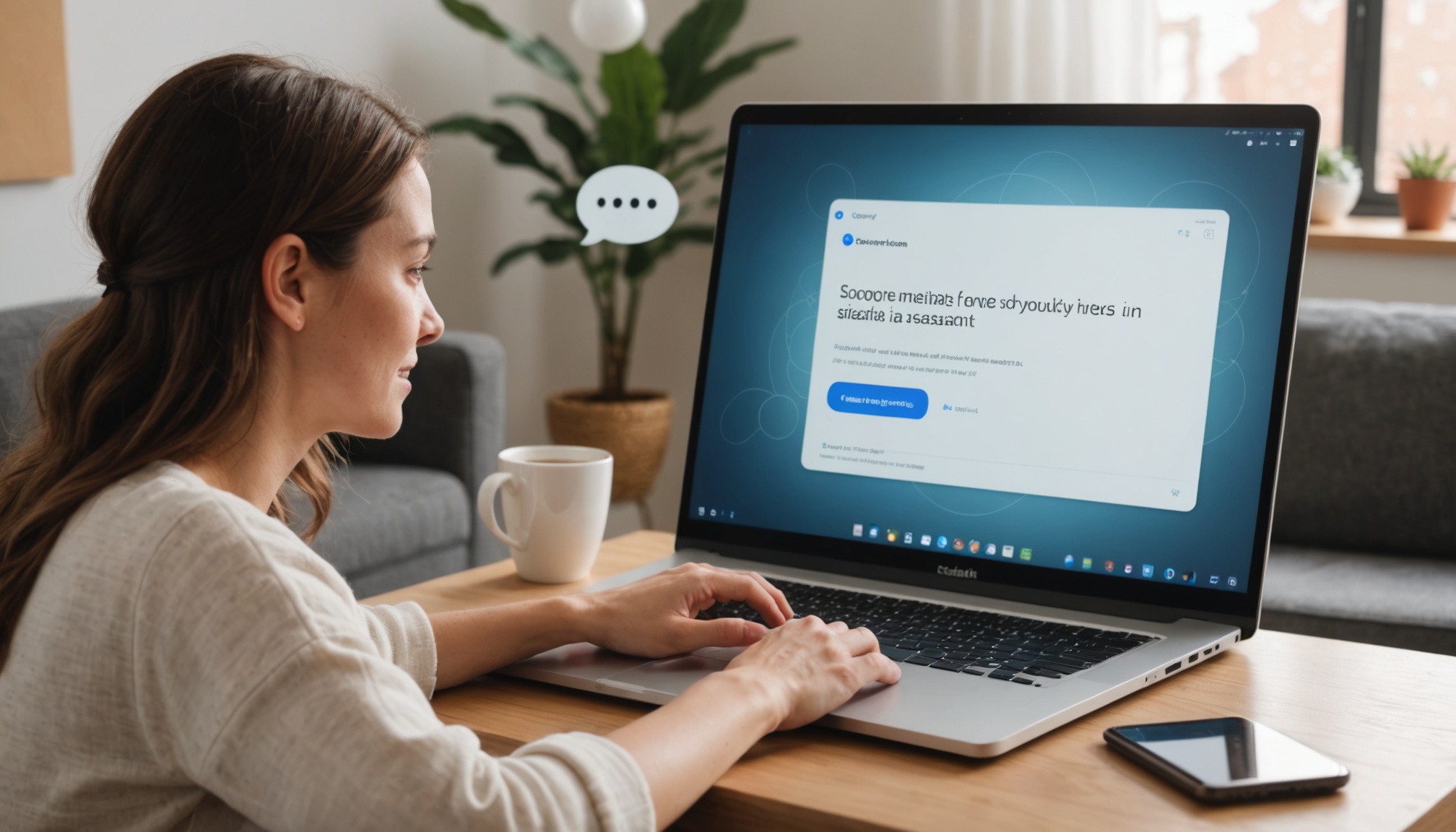
Searching for a product, comparing prices, decoding customer reviews: generative artificial intelligence has worked its way into the shopping journey of French consumers in just a few months. But when it comes to handing over the credit card directly, distrust remains widespread. That's what a study by iAdvize x Ifop, conducted in early 2026, reveals, supplemented by data from the Fevad (the French e-commerce federation) and Odoxa on online shoppers.
The result: usage is already widespread, but fully delegating purchases to an AI remains, for now, a psychological threshold that most consumers refuse to cross.
Generative AI use is already widespread among online shoppers
According to the Fevad/Odoxa study, one in three French online shoppers already uses generative artificial intelligence during their online shopping journey. The figure climbs sharply among younger consumers: 49% among 15-24 year-olds, compared with 44% among executives and professionals. More broadly, 63% of French people say they use generative AI on a daily basis, a 19-point jump in less than a year.
In detail, usage remains concentrated on specific tasks: searching for and comparing products (58%), interpreting customer reviews (33%), or finding the best deals (31%). These are all actions that support the purchasing decision without replacing the consumer altogether — a pattern also seen, for instance, in the way internet users now sort through customer reviews before checking out.
Delegating purchases to AI: appealing in theory, lacking in trust
The next step — letting an AI place an order on the consumer's behalf — remains largely held back. Only 21% of French people say they are ready to delegate a purchase to artificial intelligence, and 35% say they will never do so. The trust figures are even harsher: 41% do not trust any organization, brand, or platform to manage a fully autonomous AI shopping agent, and only 17% of respondents say they fully trust AI-generated recommendations.
Yet the appetite is there: 22% of French people believe AI will handle at least 10% of their purchases over the next twelve months — a level comparable to that seen in the United States and the United Kingdom, but below the global average.
A trust ceiling around €180
When consumers do agree to give an AI assistant some autonomy, they set precise limits. On average, they tolerate an AI validating a purchase on its own up to €180, with no additional human approval. Beyond that, three conditions come up repeatedly in the study: a spending cap set per transaction (34%), the ability to instantly revoke granted authorizations (33%), and a simple refund procedure in case of error (26%).
Unsurprisingly, acceptance varies sharply depending on the type of purchase: 36% of French people would be comfortable with AI for everyday products, 32% for groceries, but only 12% for financial products. This caution echoes what's seen in other sensitive spending categories, such as decisions around a consumer credit.
Retailers still far from adopting autonomous agents
On the retailer side, the shift is also cautious: only 26% of France's Top 100 e-commerce players have, at this stage, deployed a customer-facing AI assistant. That figure stands in sharp contrast to how much the topic dominates marketing discourse, and it helps explain why brick-and-mortar stores still hold a solid place in shopping habits — a finding already confirmed by the resilience of brick-and-mortar retail in the face of pressure on purchasing power.
For retailers, the challenge isn't convincing consumers to use AI — that's already largely the case — but winning their trust on the most sensitive part: the moment when the algorithm spends money on their behalf, including in sectors such as e-commerce or consumer spending more broadly, two areas where digital habits are evolving quickly but where French consumers' vigilance remains fully intact.
Frequently Asked Questions
How many French people would be willing to let an AI make a purchase for them?
According to the iAdvize x Ifop study, 21% of French people say they are ready to delegate a purchase to artificial intelligence, while 35% rule out this possibility entirely.
Up to what amount would French consumers let an AI buy on its own?
The consumers surveyed tolerate, on average, an AI validating a purchase of up to €180 without additional human approval.
For which types of products do French consumers trust AI the most?
Acceptance is highest for everyday products (36%) and groceries (32%), and lowest for financial products, at just 12%.
Sources
- Ecommerce Nation — iAdvize x Ifop study on AI and its influence on online shopping
- Futura Sciences — French consumers open to AI assistance but still wary
- Ecommerce Nation — Salesforce 2026 study on AI in retail
This article was written with the help of artificial intelligence. Editorial policy