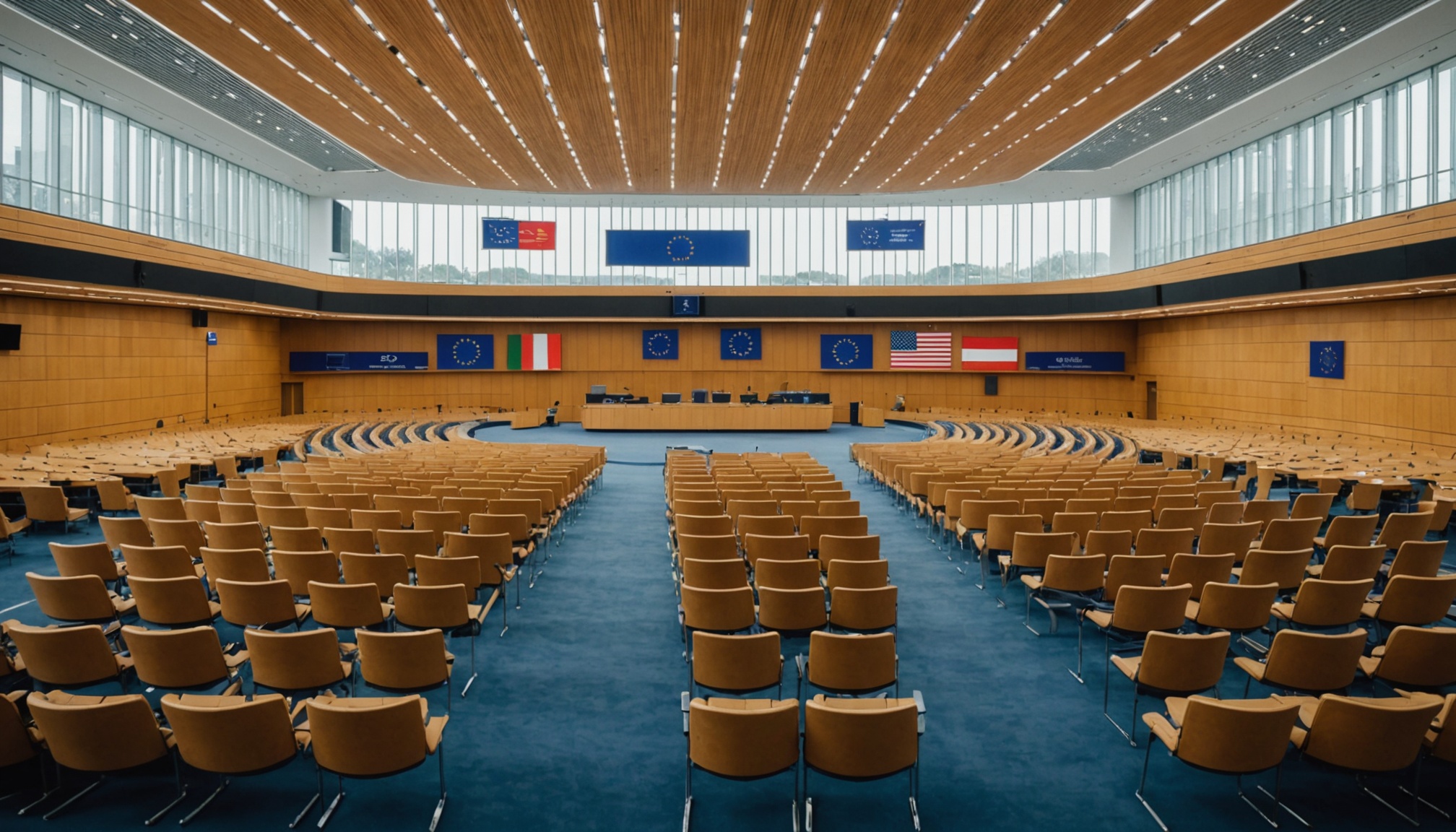
Unlike France, Estonia does not elect its president by direct universal suffrage. That task falls to Parliament, the Riigikogu — and Estonian lawmakers are meeting on September 2 and 3, 2026, to choose the successor to Alar Karis, who announced on June 23 that he would not seek a second term, citing personal and family reasons.
This vote, little known to the French public, illustrates the diversity of institutional systems within the European Union, where several countries have opted for a president elected indirectly rather than by popular vote.
A multi-round election, first in Parliament, then, if needed, in an expanded electoral college
The mechanism is precise: to be elected directly by the Riigikogu, a candidate must secure 68 votes out of 101 lawmakers, a two-thirds majority. If none of the contenders reaches that threshold after three rounds of voting held on September 2 and 3, the decision will fall to an expanded electoral college, bringing together the 101 members of Parliament and 107 representatives of local governments.
This two-tier procedure echoes, in some respects, the workings of other indirect elections found elsewhere in Europe, where direct popular vote is not always the norm for choosing certain institutional offices.
A tight race among several candidates
According to reports from Estonian public broadcaster ERR, Chancellor of Justice Ülle Madise has emerged as the frontrunner since early August, backed by the Social Democrats, the Reform Party, and Estonia 200. According to parliamentary sources, she is said to have around 67 votes secured — just short of the two-thirds threshold.
Several other figures have declared their candidacy or been mentioned as contenders: former Interior Minister Mart Helme, backed by the opposition party EKRE, piano manufacturer Indrek Laul, and former Defense Minister Hannes Hanso. The governing coalition, which holds only 52 of the 101 seats, must work with the opposition if it hopes to reach the qualified majority.
- 68 votes needed out of 101 lawmakers for a direct election in the Riigikogu
- Up to three rounds of voting on September 2 and 3, 2026
- 208 electors (101 lawmakers + 107 local officials) if the electoral college is required
A largely ceremonial role, but a highly sought-after position
Estonia's presidency remains largely honorary, with executive power concentrated in the hands of the prime minister. That status does not stop parties from fiercely contesting the post, which confers moral authority and international representation on the Baltic nation, a member of both the European Union and NATO — much like the role a head of state plays on the diplomatic stage of their country elsewhere.
This election is part of a broader 2026 electoral calendar for Europe, alongside other closely watched contests such as major elections followed closely outside the continent, which highlight the variety of electoral systems around the world.
Find all of our coverage in the Politics category, as well as our International News analyses.
Frequently Asked Questions
Why is Estonia holding a new presidential election in 2026?
Outgoing President Alar Karis, in office since October 2021, announced on June 23, 2026, that he would not run for a second term, citing personal and family reasons.
How is the Estonian president elected?
The president is elected indirectly by the Riigikogu, the national Parliament. A candidate must win 68 of 101 votes to be elected within the first three rounds. Failing that, an expanded electoral college, including local officials, decides.
Who are the main candidates?
Chancellor of Justice Ülle Madise is considered the frontrunner, backed by several coalition parties. She faces competition in particular from Mart Helme, candidate of the opposition party EKRE.
Sources
Wikipedia ·
ERR News ·
Via Baltica
This article was written with the help of artificial intelligence. Editorial policy