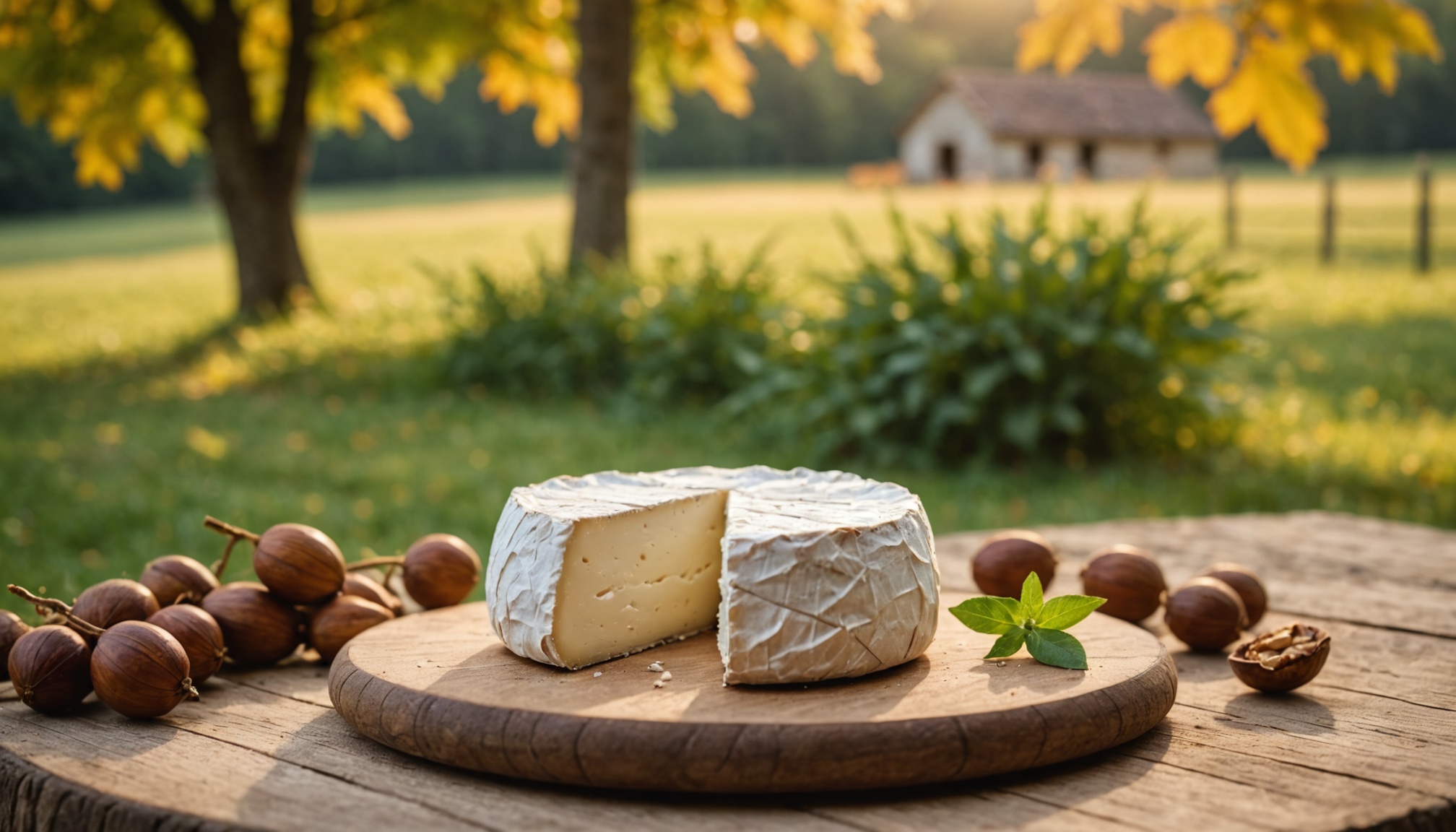
The Mothais sur feuille, an iconic goat cheese from Poitou, has officially been awarded its Protected Designation of Origin (AOP). This European label, registered on June 11, 2026, rewards more than twenty years of efforts by producers in the region to gain recognition for an artisanal know-how passed down from generation to generation. This news adds to the rich gastronomic heritage of France, already home to many specialties rooted in culinary tradition.
A Cheese with a Unique Character
Produced in the southern part of Deux-Sèvres and in four neighboring departments, Mothais sur feuille is a soft cheese made exclusively from whole, raw goat's milk. Its distinctive feature lies in its aging process: the wheel rests on a brown chestnut leaf, harvested in the fall after the first frosts, which regulates the cheese's moisture level and gives it its characteristic woodsy, forest-floor aromas. This age-old method, specific to the Poitou region, sets this cheese apart from most other French goat cheeses.
A Precisely Defined Production Area
The AOP's geographic area covers 237 municipalities spread across five departments in southern Poitou, in France:
- Deux-Sèvres
- Vienne
- Charente
- Charente-Maritime
- Vendée
The specifications impose strict rules to preserve the link between the product and its territory: goats, of the Saanen, Alpine, or Poitevine breed, must have access to pasture or an outdoor living area for at least 120 days a year, and milk production is capped at 1,000 liters per goat per year. Aging lasts a minimum of twelve days after rennet is added, and the curds are always shaped by hand, with a ladle.
A Still-Artisanal but Recognized Industry
According to 2025 industry figures, Mothais sur feuille remains a niche product: thirteen farm producers, four dairy producers, four aging specialists, and one dairy share the production, for a total volume of about 148 tons sold each year, 100 tons of which come directly from farms. A modest scale that nonetheless did not stop France's National Council for Dairy Appellations of Origin (Cnaol) from approving the application, making Mothais sur feuille the 47th French cheese to hold AOP status and the country's 52nd protected dairy product. A strong signal for a cheese industry where, according to sector specialists, the last AOP recognition for a cheese dated back to 2020.
This distinction is part of a broader movement to showcase French regional products, much like other local initiatives such as the Sacre du Pâté en Croûte in Reims, which highlight regional know-how. These forms of recognition, whether official or driven by culinary events, help spread the reputation of French gourmet destinations and products beyond the country's borders.
Why This AOP Matters for Consumers
For consumers, earning AOP status guarantees a precise framework: the origin of the milk, the aging method, and the production area are now protected under European regulations. From now on, no cheese can be sold under this name unless it meets these specifications, no matter where it is made. It is also an economic win for producers, who can better showcase their work and look forward to the industry's gradual growth, without having to give up the small-scale, artisanal approach that makes the product unique.
Frequently Asked Questions
What's the difference between an AOP and an AOC?
The AOC (Appellation d'Origine Contrôlée) is the French label, issued by the INAO (France's National Institute of Origin and Quality), while the AOP (Appellation d'Origine Protégée) is its recognition at the European level. A product typically receives AOC status before being granted AOP status, as was the case for Mothais sur feuille.
Where can I find AOP Mothais sur feuille?
This cheese is mainly found at cheese shops and markets in southern Poitou, France, as well as in certain specialty cheese shops and supermarkets that carry regional products. Since production remains limited, availability can vary from region to region.
Is the milk used pasteurized?
No, the AOP specifications require the exclusive use of whole, raw, unpasteurized goat's milk, which contributes to the cheese's rich flavor.
Sources
- INAO – The “Mothais sur feuille” name registered as AOP
- France Info – Mothais sur feuille receives AOP label
- Linéaires – Mothais sur feuille becomes the 47th French AOP cheese
This article was written with the help of artificial intelligence. Editorial policy