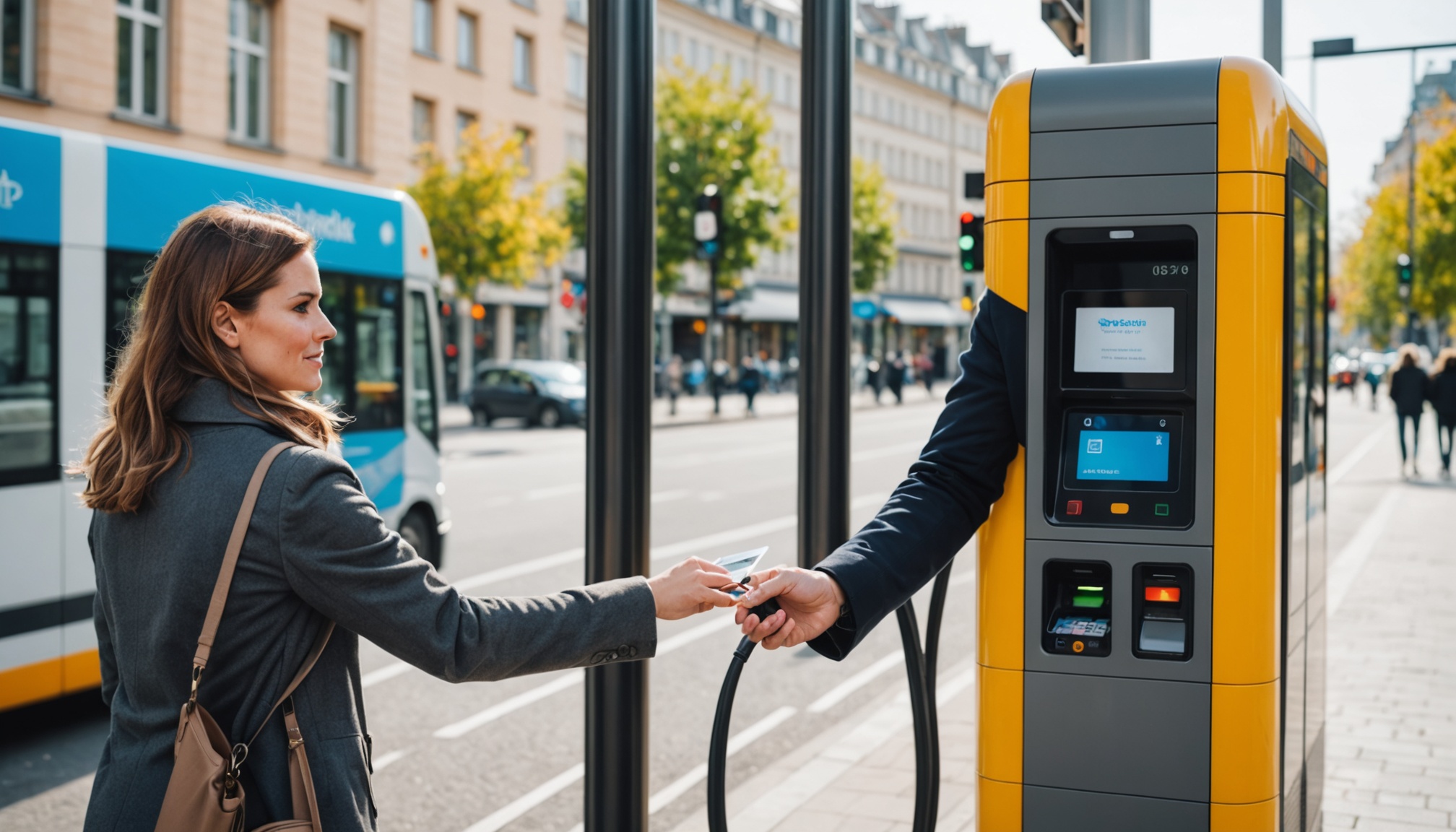
Pulling out a bus ticket or loading an app before boarding a tram: this hassle is disappearing on several urban transit networks in France. In Strasbourg, the Eurométropole (the metropolitan authority) has been rolling out, since the start of this school year, a system tested since last February on a few lines: paying for your ride directly with a contactless bank card, with no account required, no paper ticket, and no ticket counter.
The system, called open payment, turns the bus or tram's validation terminal into a simple payment reader. Riders tap their physical card, smartphone, or smartwatch on the terminal, and the fare is automatically charged at the end of the month, either at the single-ride rate or with a daily cap depending on the number of taps made. A single card can thus be used for several people traveling together, for up to four simultaneous trips.
A Service Designed for Occasional Travelers
The Compagnie des transports strasbourgeois (CTS, Strasbourg's transit operator) is primarily targeting occasional riders: visiting tourists, residents of other towns, or employees who only use the network from time to time. For these riders, buying a standard ticket—often seen as a hassle—was a real barrier to using public transit. By relying on a payment method that nearly every traveler already carries in their pocket, the network hopes to remove that obstacle and win over riders who had been turning to cars or ride-hailing services instead.
This choice fits into a broader trend of simplifying local public services, where the bank card is increasingly becoming a universal identifier. The topic also ties in with the France Identité digital ID card, another example of the digitization of everyday administrative tasks driven by public authorities.
A Trial Validated Before Full Rollout
The system was first tested on two lines of the network, bus line C3 and line G, between February and April. Ridership data and rider feedback then made it possible to fine-tune the system before its full rollout, planned across the entire Strasbourg network starting in October. On the technical side, the solution relies on a partnership between a company specializing in ticketing technology and a regional bank responsible for securing contactless payment flows.
- No app or account creation needed to validate a ride
- Supports physical cards, smartphones, and smartwatches
- Automatic fare capping to avoid paying more than a standard ticket
- Gradual rollout until the entire network is covered
A Trend That Goes Beyond Alsace
Strasbourg is not an isolated case: several French and European metropolitan areas are testing similar systems to streamline access to transit networks and reduce fraud linked to paper tickets. This development comes alongside other efforts to modernize urban mobility, such as recent reforms affecting freight transport and the regional eco-tax, which illustrate local authorities' desire to thoroughly rethink how travel is organized. On a national scale, however, the accessibility of digital services remains an issue, since riders without a bank card or unfamiliar with contactless payment must still have alternatives available.
For local authorities, the benefit goes beyond rider comfort: simplifying network access also makes it possible to collect more detailed ridership data, useful for adjusting frequencies and routes. It's an issue of economic management as much as of service quality, much like the efforts recently made in Strasbourg to boost the city's appeal and accessibility.
Frequently Asked Questions
Do you need to install an app to use this payment method?
No. Just tap a contactless bank card, a phone equipped with mobile payment, or a smartwatch on the validation terminal on board the vehicle. No prior sign-up is required.
Is the fare the same as with a standard transit ticket?
The system applies a per-ride fare comparable to a standard ticket, with a daily cap that prevents paying more than a pass would cost if several rides are taken in the same day.
Does this system replace existing passes?
No, it's an additional option aimed primarily at occasional riders. Standard passes and transit cards remain available and are still the most economical option for regular riders.
Sources
This article was written with the help of artificial intelligence. Editorial policy