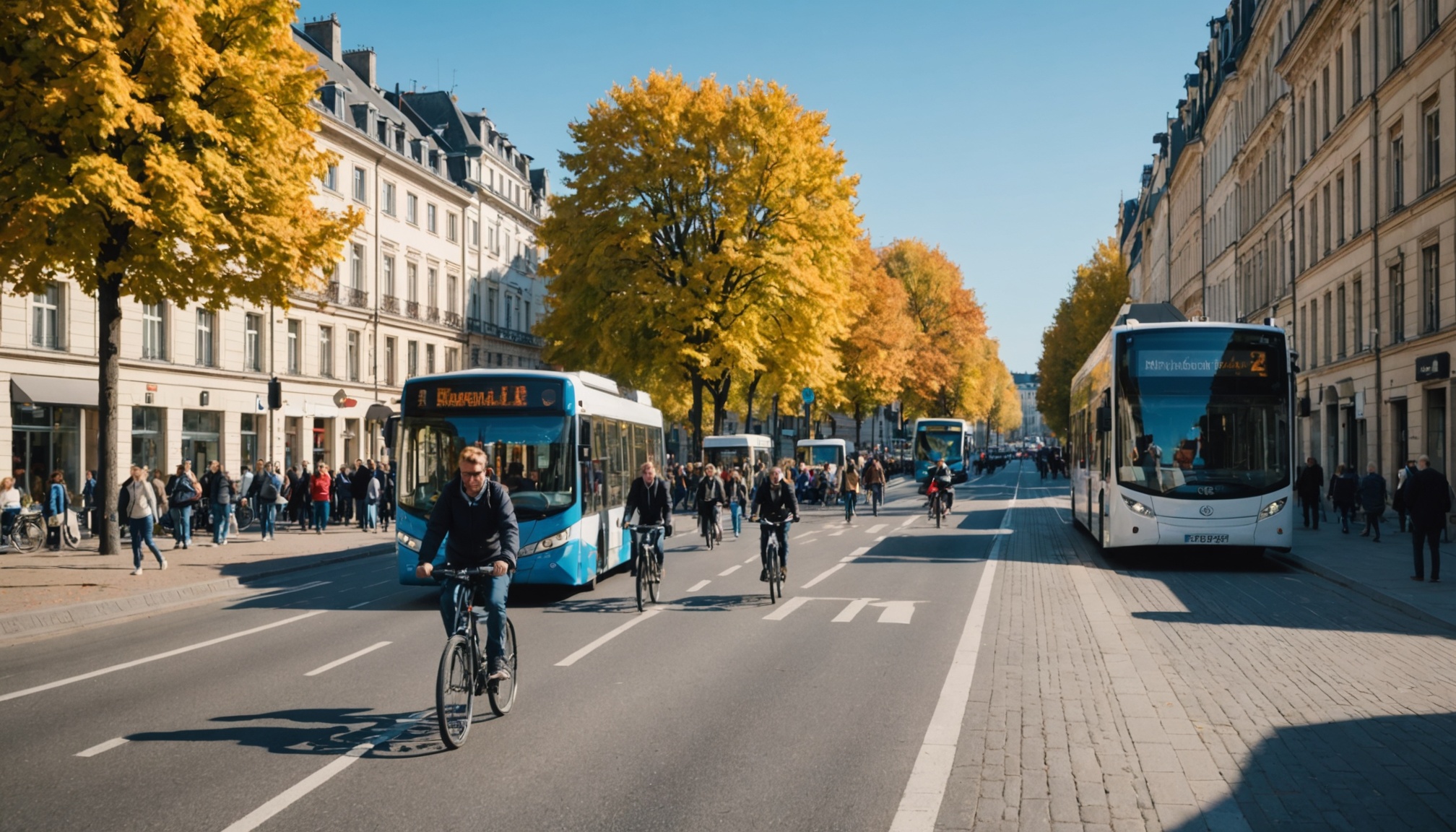
Until September 22, more than 2,500 cities and towns across Europe are taking part in European Mobility Week, an annual campaign led by the European Commission and promoted in France by the Ministry of Ecological Transition. This 25th edition closes, as always, with a car-free day, but this year's theme, “mobility for all,” shifts the focus to a broader question: who really has access to sustainable transportation today?
A week, dozens of local initiatives
From September 16 to 22, local governments across France are rolling out initiatives to encourage residents to leave their cars at home. Some go so far as to make their entire bus network free for the whole period, like the Dracénie Provence Verdon metropolitan area in the Var department. Others, such as Douarnenez, open up their local network for free for a week, including routes connecting surrounding rural towns. Smaller local governments choose a single symbolic day of free travel, like the Arve & Salève Community in Haute-Savoie, which suspended ticketing on its bus network on Saturday, September 19. These initiatives largely rely on existing public transit services, temporarily reorganized for the occasion.
“Mobility for All”: Equity at the Heart of the 2026 Theme
Unlike previous editions, which focused more on environmental issues, the theme chosen for 2026 emphasizes equitable access to sustainable transportation. The idea: a resident of a rural area, an elderly person, or a low-income household does not have the same travel options as a well-connected urban worker. The European Commission's Representation in France notes that the campaign aims precisely to make alternatives to individual cars accessible regardless of age, income, place of residence, or ability.
What Cities Are Actually Offering
- Guided bike rides and free repair workshops;
- Full or partial free access days for bus and tram networks;
- Streets closed to car traffic for neighborhood events;
- Information booths on carpooling and local incentives for low-impact mobility.
This kind of local initiative is part of a broader movement toward digitalizing everyday transportation, as already shown by contactless payment becoming a transit ticket in Strasbourg: making physical and practical access to alternatives to individual cars easier has become a shared focus for many local governments.
A Backdrop of Tension Over Freight Transport
European Mobility Week isn't only about individual trips. At the same time, freight transport remains a sensitive issue for regions and carriers, as our article on the heavy truck ecotax in France pointed out. Decisions on everyday logistics are thus part of the same dynamic as this week's efforts around personal travel, against a backdrop of seeking balance between cost, restraint, and efficiency.
A Signal That Goes Beyond the Dedicated Week
This one-time mobilization is part of a broader trend already seen this fall, torn between a push for restraint and a desire for conviviality in French lifestyles, as detailed in a previous article on the new fall lifestyle of the French. It remains to be seen whether the habits picked up during this test week will survive once everyday routines resume and the free offers end.
Frequently Asked Questions
What is European Mobility Week?
It's an annual campaign led by the European Commission, inviting local governments to offer activities and alternatives to individual cars from September 16 to 22, closing with a car-free day.
Do all French cities offer free transit?
No, participation remains local and voluntary. Some towns offer completely free transit for the whole week, while others limit it to a single day or offer activities without free transit.
Why does the 2026 theme focus on equity?
Because access to sustainable transportation remains uneven depending on where people live, their age, or their income: the campaign aims to prevent sustainable mobility from staying out of reach for those who are less well served.
Sources
Ministry of Ecological Transition — European Mobility Week
European Commission Representation in France — Mobility for All
Proximiti — Free Buses and Employers Honored
This article was written with the help of artificial intelligence. Editorial policy