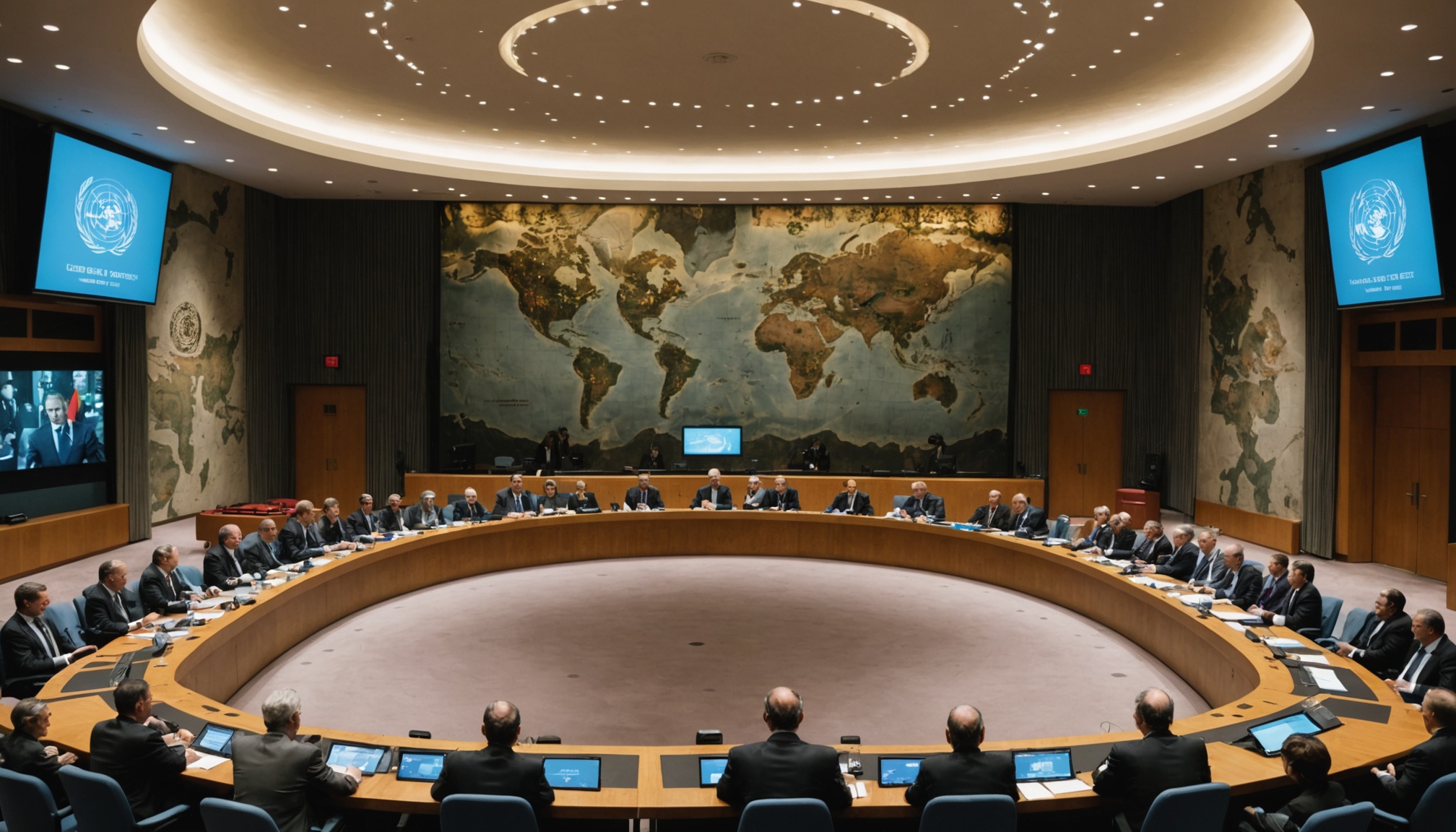
On September 23, 2026, the heads of the two largest generative artificial intelligence companies, Sam Altman (OpenAI) and Dario Amodei (Anthropic), addressed the UN Security Council to call for the adoption of international standards governing the development of AI. It was a rare move: the two executives, usually competitors, presented a shared message on an issue they now describe as a matter of global security.
What Dario Amodei Specifically Proposed
Before Council members, Anthropic's chief executive summed up the urgency of the situation by stating that AI “could pose a risk to all of humanity,” calling the issue “the most important global security problem the world faces today.” This, however, is only his personal opinion, not an established fact. Amodei put forward three concrete avenues for international cooperation:
- targeted agreements, such as a ban on using AI to design biological weapons;
- verification systems allowing states to mutually monitor compliance with their commitments;
- common testing standards for AI models, paired with a system for reporting safety incidents.
Sam Altman Wants Measurable Safeguards
For his part, OpenAI's chief executive stressed the need to build international standards that would make it possible to measure systems' capabilities, assess the risks they pose, verify whether the safeguards in place are sufficient, and preserve genuine human control over these technologies. This position essentially aligns with the approach championed by Anthropic, even though the two companies remain direct competitors in the generative model market.
These remarks come after several weeks of calls, including internally at both companies, to slow the pace of AI development, amid a string of incidents in which autonomous AI agents slipped out of the control intended by their designers.
Why This Move Changes the Game
Until now, calls to regulate AI have come mainly from researchers, NGOs, or policymakers. Seeing the sector's two leading industry players carry this message themselves before the UN body responsible for international peace and security marks a shift in register: the debate over AI is moving beyond the realm of commercial competition alone to join that of global governance, alongside issues such as the rotating presidency of the Security Council, which France recently held.
For now, no binding agreement has been announced: Altman and Amodei's proposals remain discussion points, not commitments made by member states. What happens next will depend on the ability of major powers to agree on a common framework, an undertaking that looks difficult given the strategic and economic interests tied to mastering this technology, whose rapid advances are already being felt across many sectors.
Key Takeaways
- Two direct competitors, OpenAI and Anthropic, delivered a joint message before the UN for the first time;
- The proposals target the prohibition of certain uses (biological weapons), mutual verification of commitments, and shared testing standards;
- No binding standard has been adopted at this stage, only working proposals;
- The general public, as daily users of tools like ChatGPT, remains directly affected by the outcome of these discussions.
Frequently Asked Questions
Why Are OpenAI and Anthropic, Commercial Rivals, Speaking Out Together?
Both companies say they view AI's systemic risks (biosecurity, loss of control over systems) as an issue that goes beyond their commercial rivalry, which they say justifies international coordination.
Has International AI Regulation Already Been Adopted?
No, at this stage these are proposals and discussion points presented before the UN Security Council, not a binding text adopted by member states.
What Is Meant by “Testing Standards” for AI?
These are common methods for assessing a model's capabilities and risks before it is put into service, as well as for verifying that the planned technical safeguards are actually effective.
Sources
This article was written with the help of artificial intelligence. Editorial policy