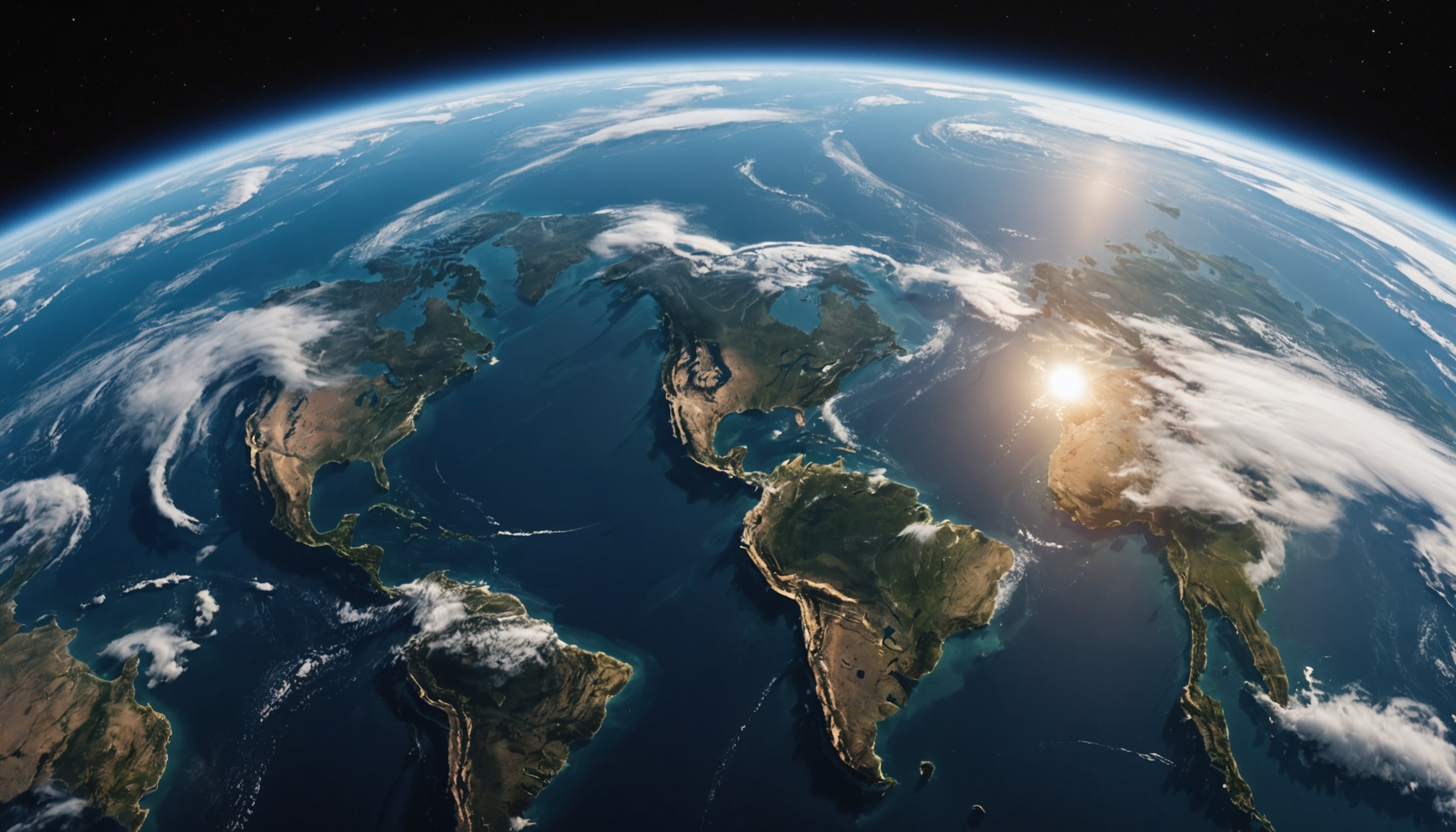
A new international scientific assessment has just landed, and it is worrying climate scientists and ecologists alike: according to the Planetary Health Check 2026, published in late September by the Stockholm Resilience Centre and the Potsdam Institute for Climate Impact Research (PIK), seven of the nine planetary boundaries that define humanity's safe operating space have now been crossed, some at levels never recorded before.
What Is a Planetary Boundary?
The concept was formulated in 2009 by a team of international researchers led by Swedish scientist Johan Rockström. It identifies nine vital processes that regulate the Earth's stability: climate, biosphere integrity, land-system change, freshwater use, biogeochemical flows (notably nitrogen and phosphorus), “novel entities” (plastics, persistent chemicals), ocean acidification, stratospheric ozone depletion, and atmospheric aerosol loading. As long as humanity stays within these boundaries, the planet retains its capacity to absorb shocks. Beyond them, the risk of irreversible tipping points increases.
Seven of Nine Boundaries Now Crossed
The 2026 report confirms that the degradation is continuing and accelerating. The seven boundaries now crossed are:
- climate change;
- biosphere integrity (biodiversity loss);
- land-system change;
- freshwater cycle modification;
- biogeochemical flows (nitrogen, phosphorus);
- the introduction of novel chemical and plastic entities;
- ocean acidification, the most recent to cross its critical threshold, in 2025.
Only two boundaries remain, for now, within a zone considered safe: the stratospheric ozone layer, whose gradual recovery shows that a collective turnaround remains possible, and atmospheric aerosol loading.
Consequences Already Visible on the Ground
The report's authors link this finding to the extreme events observed in recent months: record ocean heat, droughts, floods, and wildfires. In France, the degradation of freshwater resources concretely illustrates one of these crossed boundaries: the country's groundwater tables remain below their seasonal norms, a local symptom of a global imbalance. Likewise, water contamination by PFAS and other persistent substances falls directly under the “novel entities” planetary boundary, one of the hardest to roll back according to scientists.
Biodiversity loss, another crossed boundary, also translates into disrupted local balances: the spread of the Asian hornet or the difficulties faced by entire industries, such as the snail farming sector weakened by the heat wave, are concrete illustrations at a regional scale.
Why This Report Matters for Everyone
In our Planet section, planetary boundaries aren't just an academic tool: they are now used as a reference by businesses, local governments, and financial institutions to assess their own environmental risks. An additional breach concretely means increased risks for agriculture, access to drinking water, public health, and long-term economic stability. Researchers stress one important point, however: these boundaries are not instant points of no return, but precautionary thresholds. Staying below them increases safety margins; crossing them reduces the Earth's ability to absorb new shocks, whether climatic or economic.
Frequently Asked Questions
Who created the concept of planetary boundaries?
It was proposed in 2009 by a team of researchers led by Swedish scientist Johan Rockström of the Stockholm Resilience Centre, in collaboration with Earth-system specialists from around the world.
Which boundary was crossed most recently?
It is ocean acidification, whose critical threshold was crossed in 2025 according to monitoring by the Stockholm Resilience Centre and the Potsdam Institute for Climate Impact Research.
Are any planetary boundaries still being respected?
Yes, two out of nine: the stratospheric ozone layer, which is gradually recovering following international agreements signed decades ago, and atmospheric aerosol loading.
Sources
Potsdam Institute for Climate Impact Research (PIK) —
Stockholm Resilience Centre —
France 24
This article was written with the help of artificial intelligence. Editorial policy