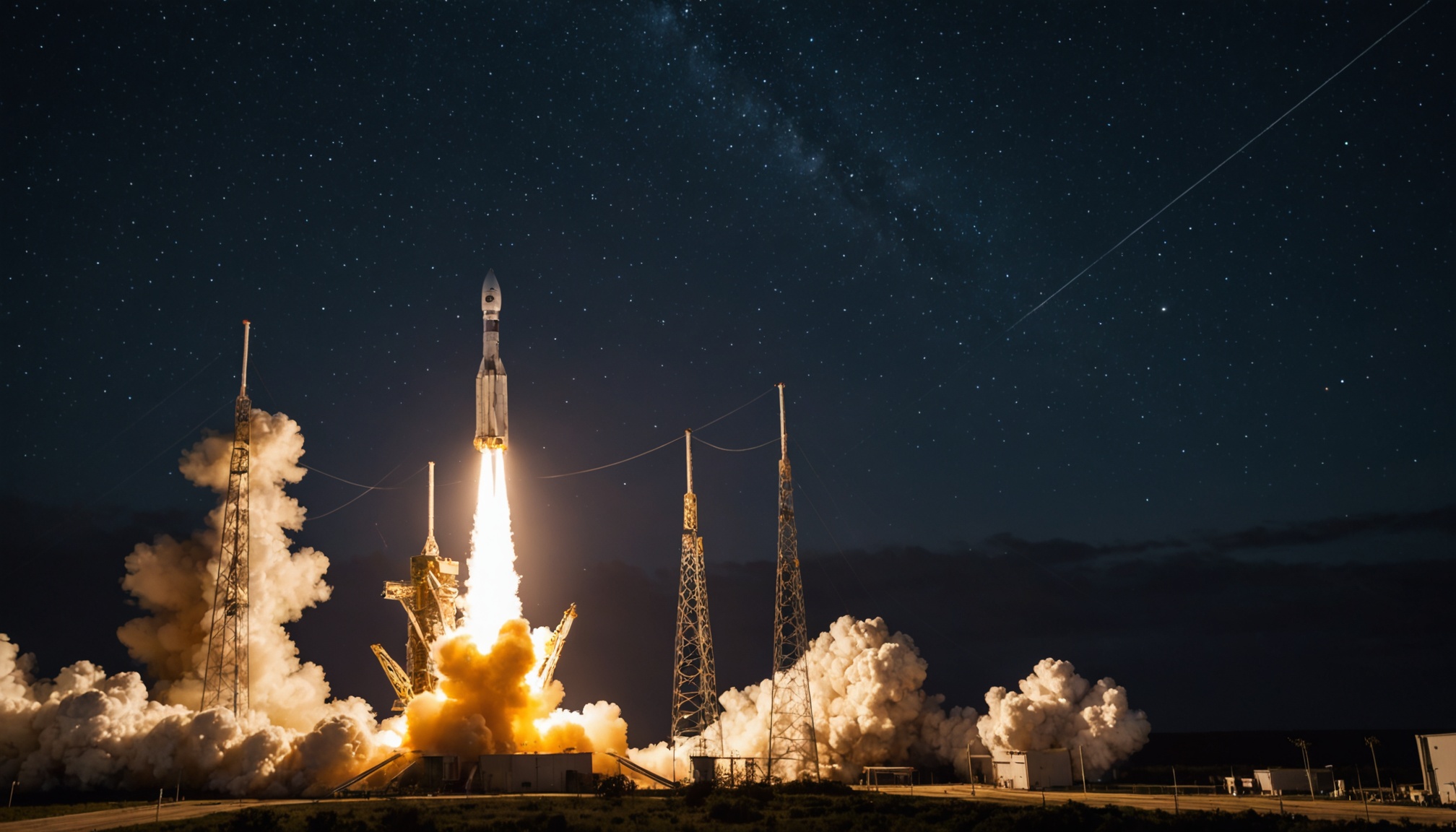
On September 15, 2026, a Vega-C rocket lifted off from the Kourou spaceport in French Guiana to place two new Earth observation satellites into orbit: FLEX and Sentinel-3C. This dual mission, operated by the European Space Agency (ESA) and Italian launch provider Avio, marks another milestone for Europe's Copernicus environmental monitoring program.
A Successful Launch from French Guiana
Liftoff took place on September 14 at 10:21 p.m. local time in Kourou, or 3:21 a.m. on September 15 in mainland France. The two satellites separated from the launcher as planned and immediately began communicating with ground teams. Their critical commissioning phase, known as the “Launch and Early Orbit Phase,” concluded successfully on September 18, confirming the mission was proceeding as expected.
FLEX and Sentinel-3C were both built by Thales Alenia Space, the project's industrial prime contractor, highlighting the central role European space industry plays in this kind of scientific mission.
Two Complementary Missions for the Planet
Sentinel-3C reinforces the Copernicus constellation, Europe's Earth observation program already used to track ocean temperatures, vegetation, and coastline changes. It is gradually replacing older satellites in the same family, ensuring the continuity of climate data collected over more than a decade.
FLEX, for its part, is a more experimental mission: it will measure the fluorescence emitted by vegetation during photosynthesis, a valuable indicator for assessing the health of crops and forests worldwide. Combined with Sentinel-3C data, this measurement should help scientists refine their understanding of Earth's carbon cycle.
- Successful launch on September 15, 2026 from Kourou, French Guiana
- Two satellites: Sentinel-3C (ocean and land observation) and FLEX (vegetation health)
- European Vega-C rocket, operated by Avio
- Satellites built by Thales Alenia Space
- Early orbit mission successfully completed on September 18, 2026
Why This Launch Matters
Beyond the technical achievement, this dual launch illustrates Europe's strategy of space autonomy: having its own launch capabilities and its own observation satellites rather than depending on foreign operators to monitor climate and natural resources. The data produced by Sentinel-3C and FLEX will be made available to researchers, environmental agencies, and eventually the general public, in keeping with ESA's open data policy.
This success also comes as Europe's space sector seeks to strengthen its position against international competition, a challenge that is both technological and economic for the continent's manufacturers. The next Vega-C missions, already scheduled, should confirm this momentum and will be of great interest to space technology enthusiasts.
Frequently Asked Questions
What is the Sentinel-3C satellite used for?
It observes oceans, land, and vegetation for the European Copernicus program, taking over from previous Sentinel-3 satellites to ensure continuity of climate data.
What does the FLEX mission add that's new?
FLEX measures the fluorescence emitted by plants during photosynthesis, an indicator that helps assess vegetation health and refine our understanding of the carbon cycle.
Who built and launched these satellites?
Both satellites were built by Thales Alenia Space and launched by a Vega-C rocket operated by Italian manufacturer Avio, from the Kourou spaceport in French Guiana.
Sources
This article was written with the help of artificial intelligence. Editorial policy