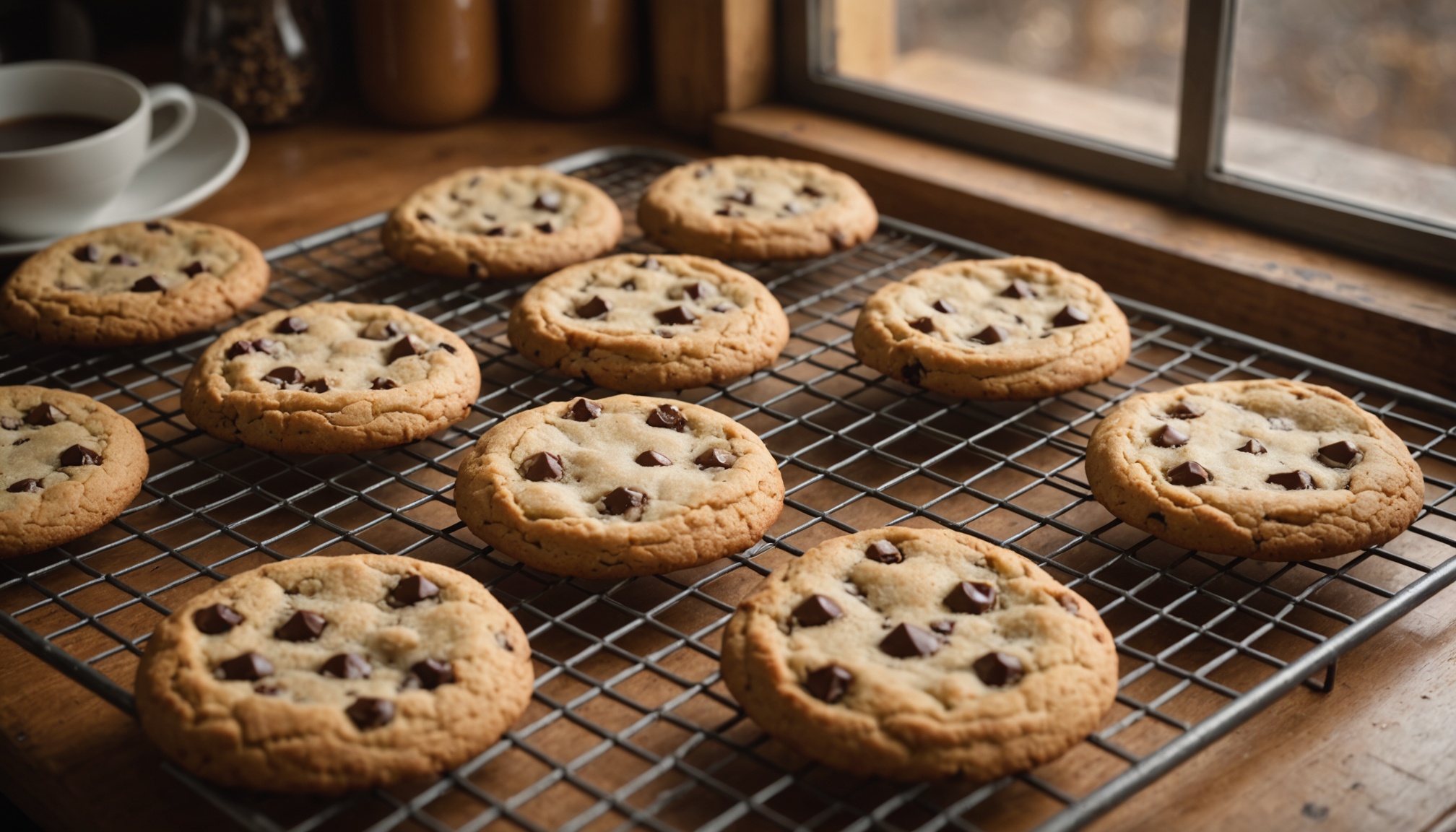
Making a cookie recipe that's soft on the inside and slightly crisp at the edges is no stroke of luck: it's mostly a matter of precise technique and well-chosen ingredients. Between the texture of the butter, the type of sugar used, and the dough's resting time, a few technical details are enough to turn an ordinary batch into cookies worthy of an American bakery.
Choosing the Right Ingredients for a Successful Cookie Recipe
Butter is the first factor that determines the final texture. Used softened (soft but not melted), it lets the dough hold its shape during baking; melted, it causes excessive spreading and flat, greasy cookies instead. The choice of sugar matters just as much: cassonade and vergeoise, moist French brown sugars that are wetter than white sugar, add chewiness and a slight caramel note, while white sugar promotes crispness. Most successful recipes combine the two to get a cookie that's soft in the center and crisp at the edges.
Chocolate also plays a role: store-bought chocolate chips melt evenly and stay fairly subtle, while chunks of a baking bar, roughly chopped with a knife, create irregular pools and pockets of melted chocolate that are highly prized in American-style recipes. Chocolate with a high cocoa content also helps balance the sugar in the dough.
For a different approach, it can be helpful to compare several methods, like the chocolate chip cookie recipe from bettycrocker.com, which walks through a classic version step by step.
The Techniques That Make the Difference
Mixing the ingredients with an electric mixer or a food processor produces a smooth dough without overworking it, which keeps the cookies from turning out too dense. Another step that's often skipped: placing the dough in the refrigerator for at least thirty minutes before baking. This chilling firms up the fat and limits spreading, while giving the flavors time to develop; some bakers even let the dough rest overnight for an even more flavorful result. When it comes to baking, it's best to take the cookies out of the oven as soon as the edges just start to turn golden: they keep cooking for a few more minutes outside the oven thanks to residual heat, which keeps them soft in the center.
The Most Common Mistakes to Avoid
- Using melted or overly warm butter instead of softened butter
- Skipping the dough's resting time in the fridge
- Overcrowding the baking sheet, which prevents even heat distribution
- Baking too long, until the cookies are fully golden in the center
These cookies are just as enjoyable for a family snack time as they are at an apéritif dinner with friends in France, served mini-sized for nibbling.
Can You Taste Raw Cookie Dough?
The temptation to taste the dough before baking is strong, but it's not without risk. Raw dough contains uncooked flour and sometimes raw eggs, two ingredients that can harbor bacteria such as E. coli or Salmonella. Health authorities, including Anses (the French agency for food, environmental, and occupational health safety), recommend avoiding it, especially for young children, pregnant women, and people with weakened immune systems, and advise always baking the dough all the way through before eating it.
A still-warm cookie, paired with a good cup of coffee, remains one of the simplest ways to end a meal or share a sweet moment.
Frequently Asked Questions
This is usually caused by butter that's too melted or dough that wasn't chilled before baking. Softened butter and thirty minutes in the refrigerator significantly limit spreading.
Cassonade or vergeoise, which are more moist than white sugar, add chewiness and a slight caramel note. Combining both sugars produces a cookie that's soft in the center and slightly crisp at the edges.
It's not recommended: raw flour and raw eggs can contain bacteria such as E. coli or Salmonella. It's best to save tasting for fully baked cookies, especially for children and vulnerable individuals.
Sources
- Anses — Foods contaminated with E. coli bacteria: health effects and prevention
- Académie du Goût — Brown and white sugar, vergeoise or cassonade: what are the differences?
- L'Atelier de Roxane — Why are your cookies too flat?
This article was written with the help of artificial intelligence. Editorial policy