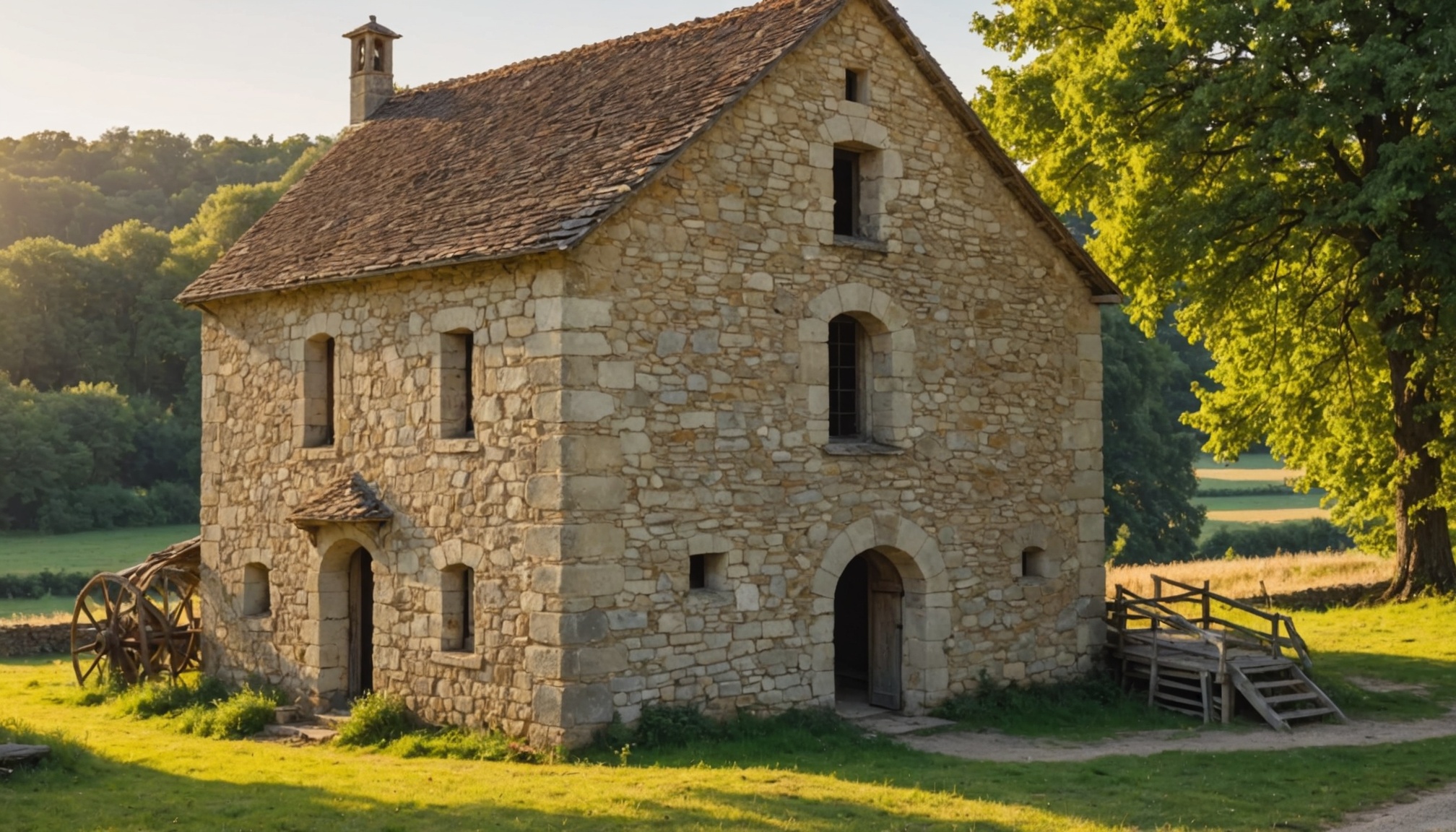
A Norman church, a mill in Picardy, a botanical greenhouse, a 1930s municipal swimming pool, a former sanatorium in the Alps: this is what the list of the hundred sites chosen for the 2026 edition of the Loto du Patrimoine (France's heritage lottery) looks like this year. The announcement, made in late August by the Mission Bern, confirms a deeper trend: the heritage that France chooses to save is no longer limited to castles and cathedrals.
A Hundred Sites, a Much Broader Range Than Castles
Led by television host Stéphane Bern since 2018, the Mission Patrimoine is run by the Fondation du patrimoine (the French heritage foundation), with support from the Ministry of Culture and FDJ United. For this edition, more than a third of the selected projects involve religious heritage: chapels, churches, and priories at risk of closing for lack of renovation work. But the 2026 selection also embraces a broader definition of the word “heritage,” including industrial, sports, and leisure buildings — a swimming pool, a mill, a greenhouse — whose local historical value is often overlooked by the general public.
How the Loto du Patrimoine Works
In practice, eight special drawings were held between September 7 and 21, 2026, supplemented by scratch tickets sold year-round at tobacco shops partnered with La Française des Jeux (the French national lottery operator). Part of the proceeds goes to the Fondation du patrimoine, which then funds restoration work on sites bearing the “Mission Bern” label. Since the program launched in 2018, more than 1,080 projects have been supported across France, including its overseas territories.
The principle differs from that of the Pass Patrimoine, launched the same year: while that subscription funds access to monuments already open to the public, the Loto du Patrimoine funds the restoration of sites that are often closed, sometimes in a state of advanced disrepair, even before they can welcome a single visitor.
What This Means for Residents, in Practical Terms
For the towns involved, selection mainly guarantees funding that unlocks projects that have been on hold for years, sometimes for lack of sufficient municipal budget. For the public, it's a chance to rediscover local heritage that appears in no national tourist guide. The full list of the hundred sites, organized region by region, can be viewed on the website of the Ministry of Culture and that of the Fondation du patrimoine — anyone can check whether a site in their own department was selected.
This edition comes just weeks after Journées du patrimoine (Heritage Days), which had already put a spotlight on places usually closed to the public. The Loto du Patrimoine follows the same logic: bringing into the light a heritage that, like the “largest museum in France” highlighted by Michelin, is not limited to its best-known monuments.
Frequently Asked Questions
Who decides which sites are selected each year?
The selection is made by the Fondation du patrimoine, in coordination with the Mission Bern, based on applications submitted by local governments and the associations that own the sites, using criteria of urgency and local heritage value.
How can I take part in the Loto du Patrimoine?
By buying a ticket during the special drawings held in September, or a dedicated scratch ticket, available year-round at tobacco shops partnered with La Française des Jeux.
Is religious heritage the only focus?
No. While it accounts for more than a third of the sites selected in 2026, the selection also includes industrial, sports, and leisure heritage, such as mills, greenhouses, and municipal swimming pools.
Sources
This article was written with the help of artificial intelligence. Editorial policy