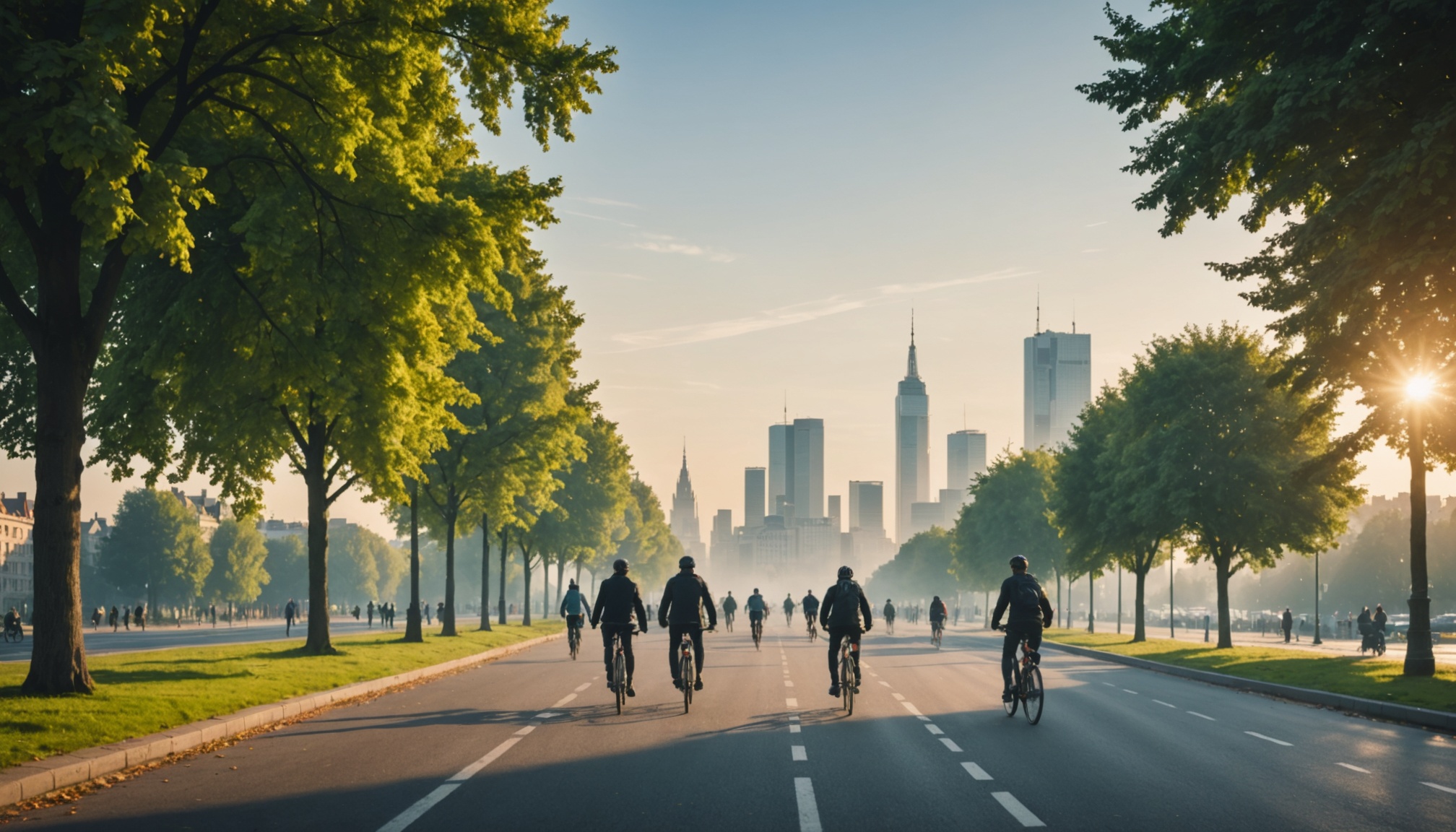
A new ranking measures air quality in 40 major European cities, and the picture is mixed for French metropolises. Published on November 17, 2026 by the NGO Clean Cities as part of its “Free to Breathe” campaign, this study places Lyon, Paris, and Marseille in 23rd, 24th, and 25th place respectively, far behind the top three made up of Copenhagen, Stockholm, and Helsinki.
How Air Quality Was Assessed
To build its ranking, Clean Cities used four complementary criteria: current concentrations of nitrogen dioxide and fine particulate matter (NO₂ and PM2.5), compliance with future European standards, the ten-year trend in pollution, and the mobility policies implemented by each city. This method has the advantage of not limiting itself to a snapshot: it also rewards cities that are improving, even if their absolute pollution levels remain high.
Where the Major French Cities Stand
Lyon, Paris, and Marseille land in the middle of the table, a ranking that contrasts sharply with the Scandinavian podium. Copenhagen owes its first-place finish to widespread cycling, infrastructure favoring active mobility, and advanced electrification of transportation. A topic already covered when several French cities tested a car-free week: the same soft-mobility levers keep coming up, again and again, among the factors that make the difference between two cities of similar size.
Why No City Checks All the Boxes
A striking finding of the report: none of the 40 cities studied meets all of the World Health Organization's recommendations, which are stricter than the future European regulatory limits. Between the thresholds set by law and those considered truly protective of health, the gap remains significant, even for the top-ranked cities. This dual standard explains some of the disagreements sometimes seen between a ranking that “praises” a city and residents who continue to complain about unbreathable air during rush hour.
What This Means for Residents
Urban air pollution isn't just a number in a ranking: it weighs on the respiratory and cardiovascular health of millions of people who live, work, or travel near major roads. Other forms of pollution, like those discussed in the article on the impact of noise pollution on animal species, remind us that urban environmental nuisances often add up rather than cancel each other out. The good news, noted by the ranking's authors, is that air quality has improved almost everywhere in Europe over the past decade, including in the lowest-ranked cities.
- Check local air quality indexes before an outdoor workout
- Favor off-peak hours for cycling or walking trips along major roads
- Air out your home outside of reported pollution spikes
- Support locally tested soft-mobility infrastructure
On the regulatory side, the logic of the polluter-pays principle is gaining ground in several environmental issues: it had already been documented regarding PFAS water pollution, where this principle is beginning to be applied concretely. The connection with urban air pollution is worth watching, as Clean Cities' ranking notes that mobility policies account for a quarter of the final score.
For more on this, the Health section and the Planet section of the site regularly cover these environmental and urban quality-of-life issues.
Frequently Asked Questions
Which European cities have the best air in 2026?
According to the Clean Cities ranking published in November 2026, Copenhagen takes first place, followed by Stockholm and Helsinki, mainly thanks to their active mobility policies.
How do Lyon, Paris, and Marseille rank?
The three French metropolises occupy mid-table positions, ranking 23rd, 24th, and 25th respectively out of 40 cities assessed, far from the podium but not at the bottom of the ranking.
Is there a city that meets all health recommendations?
No: none of the 40 cities studied meets all of the World Health Organization's recommendations, which remain stricter than the future European limits.
Sources
This article was written with the help of artificial intelligence. Editorial policy