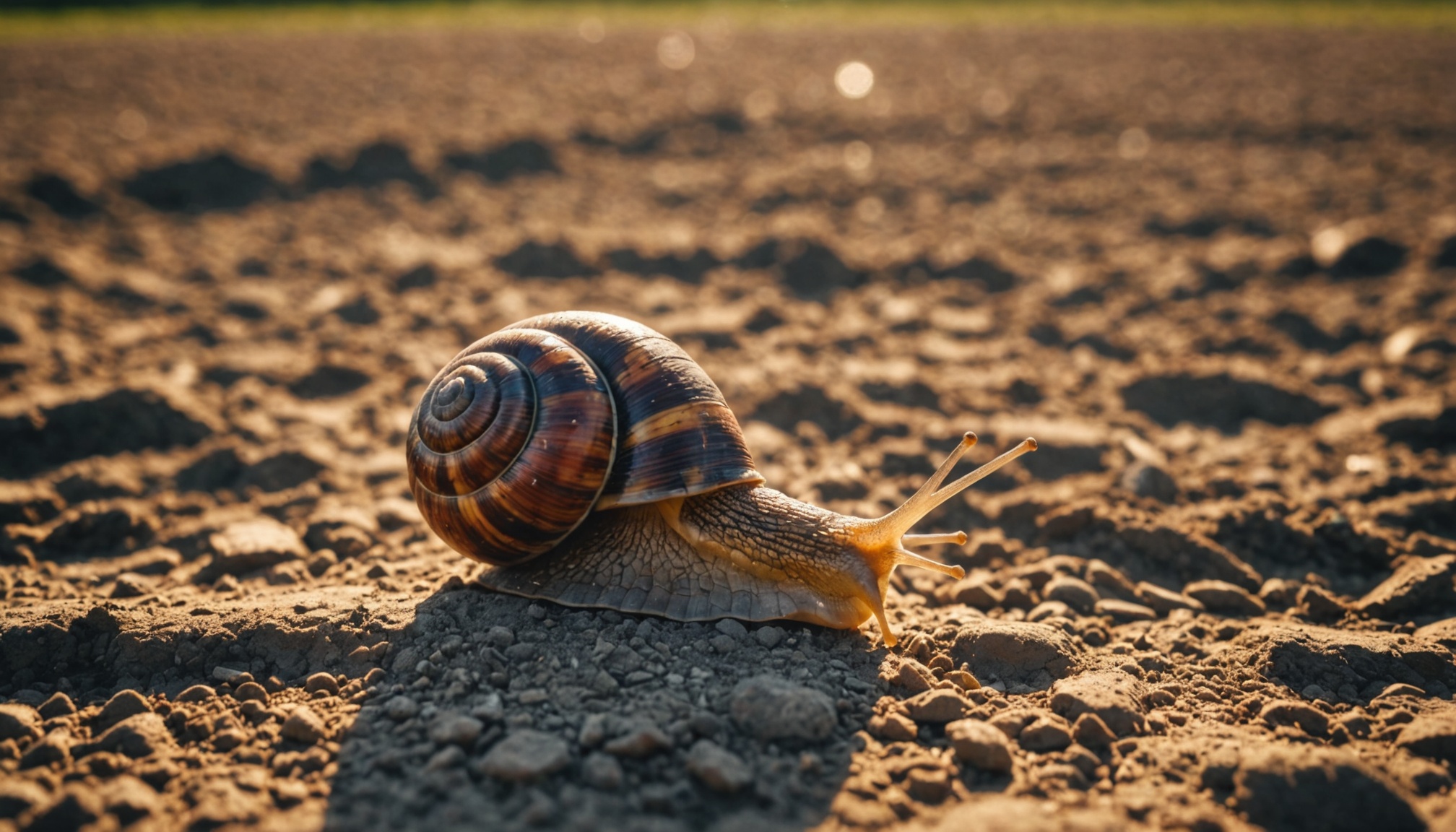
On store shelves, petit-gris and gros-gris snails from Burgundy, made in France, are becoming increasingly rare. After several summers of repeated heat waves, France's snail farming industry is going through one of the most severe crises in its history: in several regions, farmers report losing between 50% and 70% of their annual production.
Mortality Rates Soaring on Farms
Heliciculture, already a niche activity with roughly 400 producers counted nationwide, is being hit hard by successive heat waves. The mechanism is cruel: when nighttime temperatures fail to drop below 20 degrees Celsius for 48 hours straight, snails develop a bacterial infection in their intestines. In as little as three days, a farm can then lose up to 80% of its stock. Several farmers report having had to double their nighttime watering, going from three to six rounds per night, without managing to stop the die-off.
This situation, already documented last year during previous episodes of extreme drought in France, is worsening year after year as summers grow hotter.
An Industry Already Structurally Fragile
The context was already difficult: France consumes about 16,000 tons of snails each year, but produces only a tiny fraction of that volume itself, with most coming from imports, particularly from Eastern Europe. These new climate-related losses are therefore further weakening a domestic production that was already a minority share against national demand. Some farmers, in business for more than seventeen years, are now considering stopping their activity altogether at the end of the season, unable to absorb repeated financial losses.
The phenomenon ties into broader findings from Météo-France's (the French national meteorological service) latest climate report on record-breaking summers: every additional heat record translates into concrete economic losses for the agricultural sectors most sensitive to temperature swings.
What This Means for Consumers
- An even smaller share of snails actually raised in France on store shelves, despite labels reading “Escargot de Bourgogne” or “French-raised” on some packaging.
- A risk of price increases for producers who manage to keep operating, due to the scarcity of the local product.
- An incentive to check the actual origin listed on the label before buying, since regulations require the country of farming to be stated.
- A gradual shift toward other regional specialty products, similar to other French designations recently highlighted, such as Mothais sur feuille, which also come from small local industries.
Industry professionals are calling for increased support for research into more heat-resistant snail varieties, as well as aid to adapt farm buildings (shading, misting systems), to prevent the outright disappearance of a French culinary tradition.
Frequently Asked Questions
Why does heat kill farmed snails?
Beyond a certain nighttime temperature threshold sustained over several consecutive days, snails develop an intestinal bacterial infection that can wipe out an entire farm within a few days.
Does France produce much of its own snails?
No: French production covers only a small share of national consumption, with most snails sold in France coming from imports.
Will snail prices go up?
A shrinking French production, combined with heavier operating costs for the remaining farmers, raises the risk of price increases for products explicitly labeled as of French origin.
Sources
This article was written with the help of artificial intelligence. Editorial policy