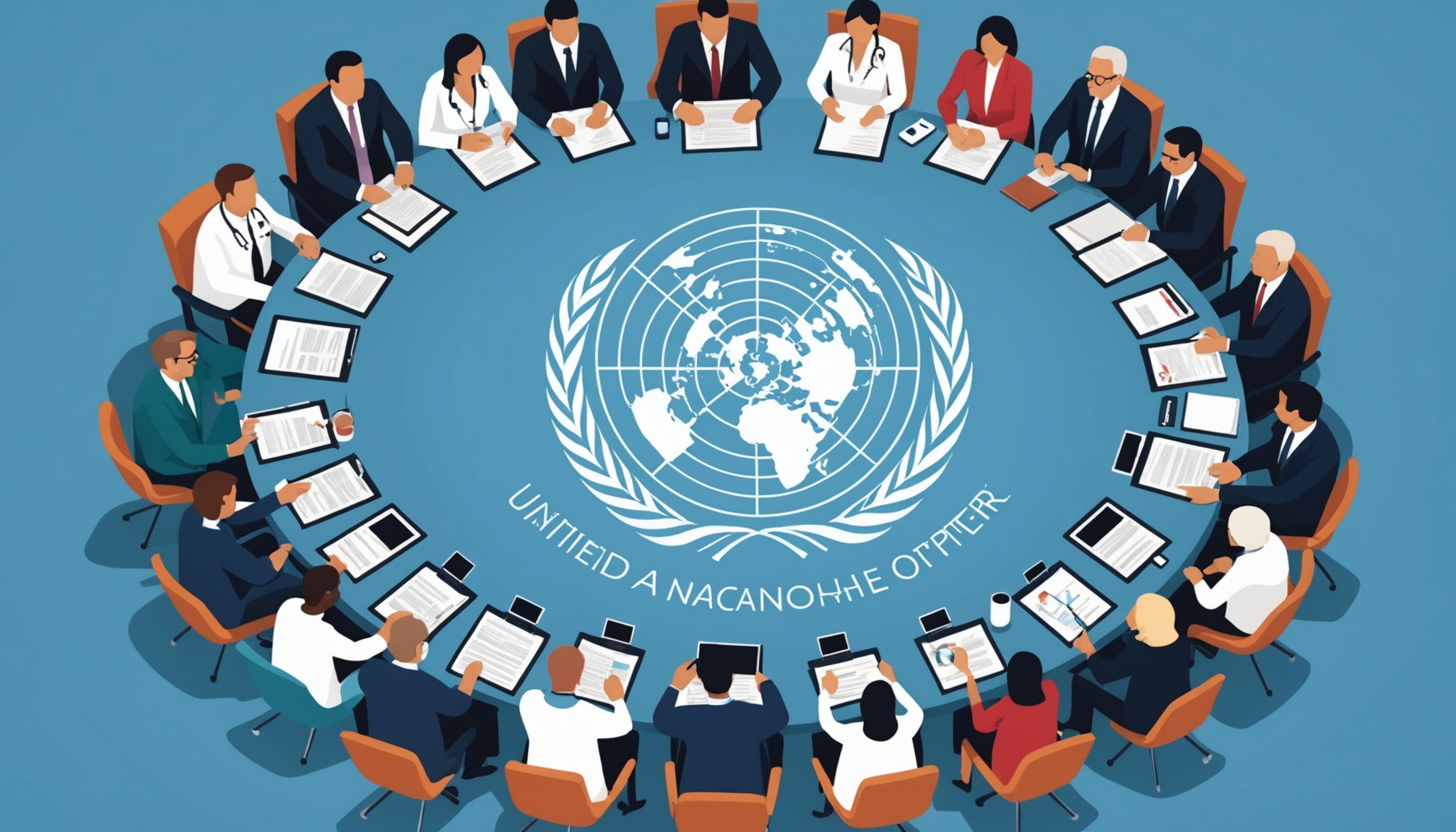
On September 25, on the sidelines of the general debate of its 81st session, the United Nations General Assembly is devoting an entire day to pandemic prevention and preparedness. This high-level meeting, the second of its kind held at this level since the Covid-19 crisis, is expected to result in the adoption of a political declaration shared by all 193 member states.
While media attention during this UN week is mostly focused on diplomatic one-on-ones between major powers, this health-focused meeting is going almost unnoticed. Yet it addresses an issue that directly concerns every country: the collective ability to detect and contain the next health emergency before it becomes a global crisis.
Learning the Lessons of a Still-Recent Crisis
Five years after Covid-19, UN Secretary-General António Guterres sums up the period as “a story of human ingenuity and human failure.” Vaccines were developed in record time, but their unequal distribution left the most vulnerable populations without access to care for many months. It was this realization that led, as early as 2023, to the creation of a first framework for discussion, now updated by this second high-level meeting.
The issue is far from abstract: in recent years, several disease outbreaks, such as the Ebola outbreak in the Democratic Republic of the Congo, have shown how quickly a virus can spread when alert and response systems are not coordinated internationally.
A Political Declaration Focused on Equity and Funding
Held under the theme of a “multilateral and intergenerational” approach to public health, the September 25 meeting is expected to produce a text negotiated beforehand by delegations, then submitted for adoption by the General Assembly. Three priorities recur in the preparatory documents published by the Assembly's presidency:
- Coordinating surveillance systems between countries, to detect an emerging pathogen before it crosses borders;
- Sustained funding for preparedness mechanisms, often neglected once the previous crisis has been forgotten;
- More equitable access to vaccines, treatments, and medical equipment in the event of a new global health emergency.
This last point directly extends the debates that already surrounded the Covid-19 vaccination campaign, in which high-income countries secured most of the available doses in the first few months. The progress made since then in vaccine research has not fully resolved the question of global distribution.
What This Means in Practice
A General Assembly declaration carries no immediate binding force: it sets a political direction, which each state remains free to translate—or not—into concrete budgetary and regulatory commitments. Its main value is keeping the issue on the international agenda at a time when the memory of lockdowns is fading and other emergencies, whether climate-related or geopolitical, are capturing leaders' attention.
For public health researchers, the challenge is also technical: improving rapid virus identification methods remains a necessary condition for turning early warnings into effective on-the-ground responses, before a localized outbreak turns into a pandemic.
Frequently Asked Questions
When is the UN high-level meeting on pandemics held?
It takes place on Friday, September 25, at United Nations headquarters in New York, as part of the high-level week of the General Assembly's 81st session.
What is a General Assembly political declaration?
It is a text negotiated in advance by the delegations of the 193 member states, adopted by consensus, which sets out shared guidelines without having legally binding force.
Why is this issue coming up again five years after Covid-19?
Because the preparedness mechanisms put in place during the pandemic tend to weaken once the crisis has passed, even though public health experts believe the risk of a new global health emergency remains ever-present.
Sources
This article was written with the help of artificial intelligence. Editorial policy