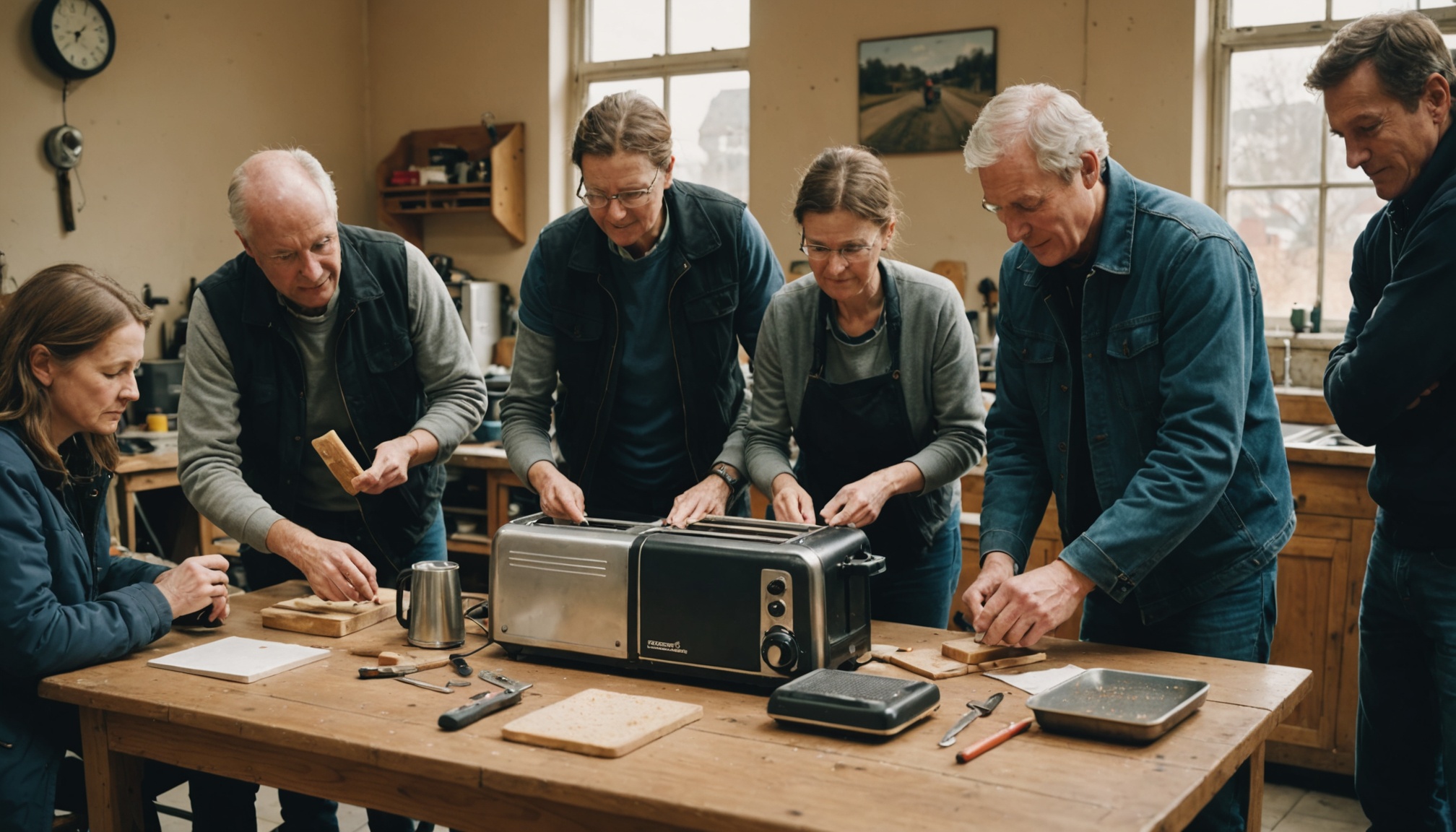
From October 15 to 18, 2026, France is holding the fourth edition of the National Repair Days: four days of free workshops, demonstrations, and drop-in sessions to learn how to repair instead of throwing away. More than 45 local authorities are supporting this year's event, organized by the HOP association (Halte à l'Obsolescence Programmée, a French group fighting planned obsolescence) and the Make.org Foundation. Updated: October 4, 2026.
A Movement Born in 2023, Growing Fast
Launched in 2023, National Repair Days initially aimed to raise public awareness about the lifespan of everyday objects. In 2025, the event brought together 49,000 participants across the country. For 2026, organizers are announcing nearly 1,400 local initiatives: collaborative repair workshops, demonstrations by craftspeople, repair cafés run by volunteers, and even city hall drop-in sessions to direct residents to the right professionals.
How to Take Part
- Events are listed on the official platforms linked to the operation and on the websites of participating local authorities: town halls, community centers, libraries, and local associations often host free workshops.
- The items most commonly brought in are household appliances, small electronics, bicycles, and textiles: visitors can bring in a broken item for an on-site diagnosis, sometimes followed by an immediate repair by a volunteer or a professional.
- No advance registration is generally required to attend workshops open to the public, but some drop-in sessions operate on limited time slots.
Why Repairing Still Needs to Become a Habit
In France, the repairability index, mandatory since 2021 for several categories of products (smartphones, laptops, televisions, washing machines, lawn mowers), was meant to make it easier to choose longer-lasting appliances at the time of purchase. But once something breaks, many consumers still give up on repairing it, held back by the perceived cost or the difficulty of finding a trustworthy professional. Our article on the pitfalls to avoid when repairing your own appliances details precisely the most common mistakes made at this stage.
A Gesture That's Part of a Broader Movement
National Repair Days join other citizen-led initiatives gaining ground in France, such as the World Cleanup Day, which likewise mobilizes millions of volunteers around a simple act. They stand in direct opposition to the throwaway logic symbolized by certain fast-fashion brands: as a reminder, Shein was fined by the DGCCRF (the French consumer protection agency) for practices deemed contrary to consumer rights, a case that illustrates the growing tensions around overconsumption.
Frequently Asked Questions
Who can take part in National Repair Days?
The event is open to everyone, with no registration required for the vast majority of workshops: individuals, families, and the curious can drop in freely over the four days.
Do I have to pay to get something repaired during these days?
Most workshops and drop-in sessions are free, run by volunteers or nonprofit organizations; some more technical interventions carried out by professionals may still come at a cost, depending on local arrangements.
What if there's no workshop near me?
Platforms dedicated to the circular economy also list, outside of these four days, permanent networks of repairers and repair cafés in many French cities.
Sources
- Épargnons nos ressources (French government) — National Repair Days
- HOP — Halte à l'Obsolescence Programmée
- National Institute for the Circular Economy
This article was written with the help of artificial intelligence. Editorial policy