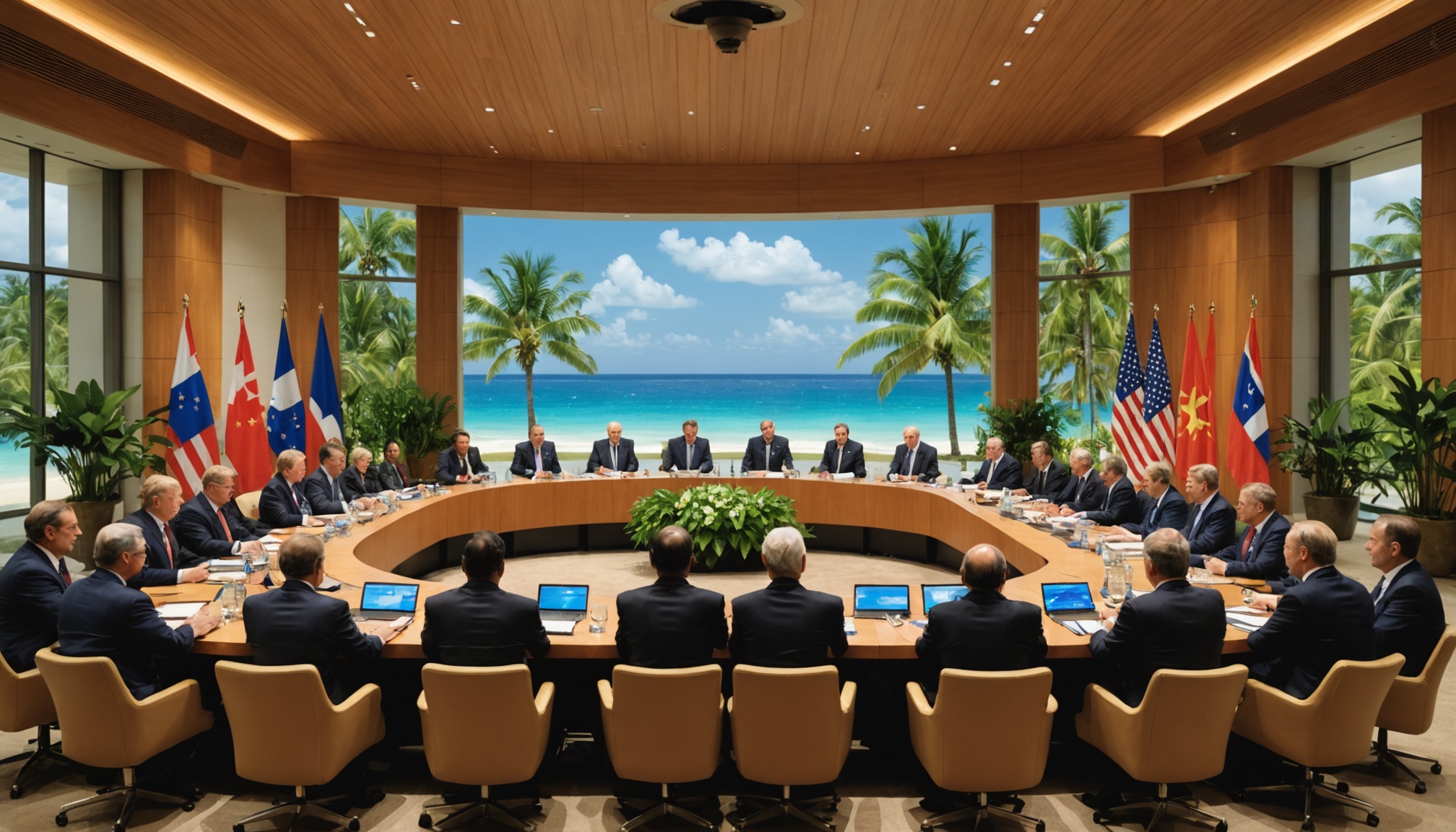
The Pacific Islands Forum wrapped up its 55th summit in Palau this week, bringing together regional leaders around a shared conclusion: climate change now represents the top threat to the economic, cultural, and territorial survival of Pacific island nations. Under the theme “B.E.L.A.U: Building Economies, Life, Action, Unity,” discussions focused on climate adaptation, ocean governance, and regional security.
A Forum Hosted by Palau to Carry the Voice of the Atolls
Hosted by Palauan President Surangel Whipps Jr, this annual gathering brings together the heads of state and government of the Forum's eighteen members, from Vanuatu to Fiji, as well as Tonga and the Solomon Islands. The host archipelago, made up of low-lying islands particularly exposed to rising seas, used the occasion to showcase its own initiatives on the environment, renewable energy, and sustainable tourism.
The discussions built on the Ocean of Peace declaration, a regional text that calls for the peaceful settlement of disputes in line with the United Nations Charter and champions the vision of a Pacific free of weapons and nuclear testing. This approach, known as the “Pacific Way,” favors dialogue and consensus among neighboring states regardless of their size.
Climate Change: An Existential Emergency for the Atolls
At the close of the talks, leaders adopted a declaration calling on the international community to honor its climate commitments and speed up the transition away from fossil fuels, while urging the world's largest economies to raise their targets ahead of the next major United Nations climate conferences. The text stresses that rising sea levels directly threaten the very existence of certain territories, some of which sit only a few meters above sea level.
This issue echoes other recent scientific findings on ocean warming: a previous assessment had already pointed to record-breaking ocean heat, a phenomenon that first affects tropical Pacific waters and weakens the coral reefs that millions of people depend on for fishing and tourism.
Oceans and Regional Diplomacy Take Center Stage
Ocean governance held a central place in the talks in Palau, covering sustainable management of fish stocks, the fight against illegal fishing, and the protection of marine ecosystems. On the sidelines of the summit, several leaders, including French Polynesia's President Moetai Brotherson, signed an international commitment to protect climate-resilient coral reefs, an initiative welcomed by environmental organizations present at the event.
This regional summit comes during a particularly busy year for multilateral diplomacy: just days earlier, another major United Nations gathering devoted to the fight against desertification wrapped up in Mongolia, while Paris is preparing to host, on September 9 and 10, an international summit dedicated to space bringing together space agencies and heads of state from around the world.
A Region Under Geopolitical Pressure
Beyond climate, the Palau meeting took place against a backdrop of growing competition among major powers for influence and partnership with Pacific island states, an issue several regional observers described as “politically charged.” Security, trafficking, and the presence of outside partners were therefore also on the agenda alongside climate priorities, without undermining the stated commitment to regional unity that the summit's theme sought to project.
Frequently Asked Questions
What is the Pacific Islands Forum?
The Pacific Islands Forum is an intergovernmental regional organization that brings together eighteen Pacific states and territories, including Australia and New Zealand, to coordinate their positions on shared climate, economic, and security challenges.
Why was climate treated as the top priority at this summit?
Many Forum members are low-lying atolls directly threatened by rising sea levels, which makes climate change an existential risk rather than just one issue among many for these nations.
What role did Palau play as the host country?
Palau, a Micronesian archipelago with a long-standing commitment to protecting its territorial waters, used its presidency to highlight its environmental policies and push for concrete commitments on oceans and renewable energy.
Sources
- Pacific Islands Forum Secretariat – political statement by leaders
- Outre-mer TV – The Pacific Islands summit opens in Palau
- Islands Business – Forum faces packed agenda and partner pressure in Palau
This article was written with the help of artificial intelligence. Editorial policy